
Why Do My Feet Swell at the End of the Day? Causes and Relief
Discover why your feet and ankles swell by the evening, from simple gravity and lifestyle factors to underlying medical conditions like venous insufficiency, and learn how Dr. Andrew N. Eskander, DPM, helps patients find lasting relief.
That tight, heavy sensation in your shoes as evening approaches isn't just a sign of a long day; it is often your body's response to the relentless pull of gravity on your circulatory system. When your favorite footwear suddenly feels two sizes too small by 6:00 PM, your body is signaling that fluid is pooling where it shouldn't be.
What's actually happening
In medical terms, this evening puffiness is known as peripheral edema. It occurs when excess fluid—mostly water and salt—leaks out of tiny blood vessels called capillaries and settles into the surrounding tissues of your feet and ankles. Under normal circumstances, your calf muscles act as a second heart, pumping blood upward against gravity. However, if those valves or muscles are under-active, fluid accumulates in the lowest points of the body.
Signs and symptoms to watch for
While swelling is the primary indicator, it often presents with other subtle changes in the lower extremities. You might notice:
- A visible increase in the size of your feet, making shoe straps feel restrictive.
- Pitting, which is when a small indentation remains for a few seconds after pressing on the swollen skin.
- Stretched, shiny, or tight-looking skin around the ankles.
- A feeling of heaviness or dull aching in the legs that improves when you lie down.
Causes and risk factors
Several factors contribute to end-of-day swelling, ranging from daily habits to biological predispositions. Chronic Venous Insufficiency (CVI) is a leading cause, where the valves in leg veins become weak and fail to push blood back to the heart efficiently. Other common triggers include:
- Prolonged Standing or Sitting: Lack of muscle movement prevents the "calf pump" from circulating fluid.
- Dietary Sodium: High salt intake causes the body to retain extra water.
- Medications: Certain blood pressure drugs (calcium channel blockers), NSAIDs, and hormones can exacerbate fluid retention.
- Weight and Pregnancy: Extra pressure on the pelvic veins can slow down blood return from the legs.
How it's diagnosed
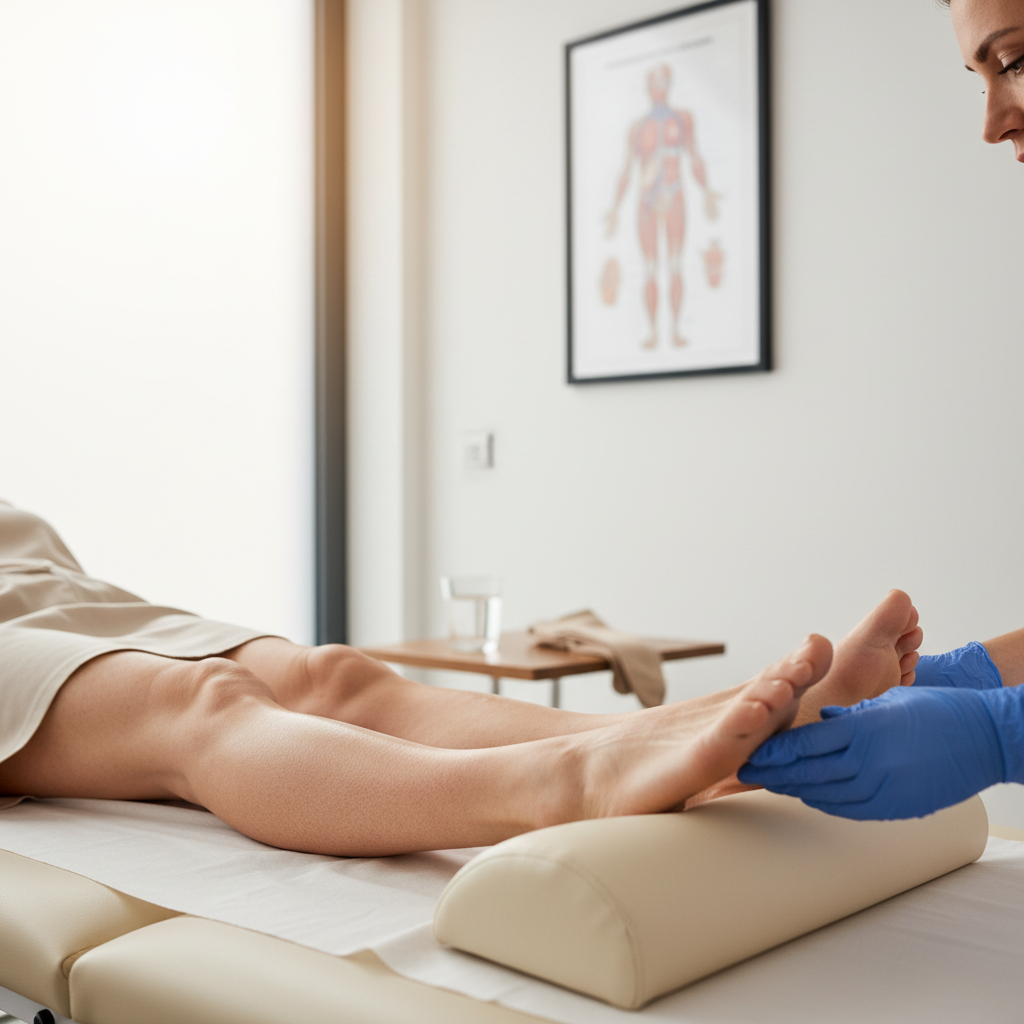
Diagnosing the root cause of edema begins with a physical examination and a review of your medical history. At Eskander Foot & Ankle, we assess the skin texture and check for signs of vascular issues. We may utilize diagnostic tools such as Doppler ultrasound to visualize blood flow and rule out blood clots (DVT) or valve failure. In some cases, blood tests are ordered to ensure the swelling isn't related to kidney, heart, or liver function.
Treatment options
Conservative care
Most mild cases of evening swelling respond well to lifestyle adjustments. The RICE method (Rest, Ice, Compression, Elevation) remains a gold standard. Elevating your feet above the level of your heart for 20 minutes several times a day allows gravity to assist in fluid drainage. Additionally, wearing medical-grade compression stockings provides external pressure to help veins move blood upward.
Advanced/minimally invasive options
If conservative measures aren't enough, we may recommend specialized physical therapy focused on lymphatic drainage. For patients with underlying venous disease, minimally invasive procedures like sclerotherapy or endovenous laser ablation can close off malfunctioning veins, redirecting blood to healthier vessels and significantly reducing daily swelling.
Surgical options
Surgery is rarely the first line of defense for simple edema. However, if the swelling is caused by structural foot deformities that limit mobility—thereby preventing the calf muscle from working—surgical correction of the foot or ankle may be necessary to restore a normal gait and improve circulation.
Key Takeaway: Evening foot swelling is often a mechanical issue where gravity outpaces circulation; consistent elevation and compression are your first lines of defense.
Recovery and what to expect
For most patients, swelling is a manageable condition rather than a quick fix. When implementing lifestyle changes like compression and elevation, you can expect to see a reduction in puffiness within 1 to 2 weeks. If the cause is related to medication or diet, improvements often occur within days of making the necessary adjustments under medical supervision.
Prevention and self-care tips
- Keep Moving: If you work at a desk, perform ankle circles or stand up every hour to engage your calf muscles.
- Monitor Salt Intake: Aim for fresh, whole foods to reduce systemic water retention.
- Hydrate Properly: It sounds counterintuitive, but drinking enough water helps your body flush out excess sodium.
- Choose Proper Footwear: Avoid shoes that are overly tight or have restrictive straps that can act like a tourniquet.
When to see a podiatrist
While occasional swelling after a long flight or a salty meal is common, certain signs require professional evaluation:
- The swelling occurs in only one leg rather than both.
- The swelling is accompanied by redness, warmth, or pain (signs of infection or a clot).
- You notice skin ulcerations or sores that are slow to heal.
- The swelling is persistent and does not resolve after a night of sleep.
- You experience sudden shortness of breath or chest pain alongside leg swelling.