
What is the Fastest Way to Heal an Ingrown Toenail at Home?
Discover effective home remedies for ingrown toenails, understand when self-care is safe, and learn the clinical signs that indicate it is time to seek professional podiatric treatment for permanent relief.
That sharp, throbbing pressure at the corner of your toe can turn every step into a calculated risk. When a toenail begins to dig into the surrounding skin, the resulting inflammation can quickly escalate from a minor annoyance to a painful infection that limits your mobility.
What's actually happening
An ingrown toenail, clinically known as onychocryptosis, occurs when the side or corner of the nail plate grows into the soft flesh of the nail fold. According to the American College of Foot and Ankle Surgeons, this most commonly affects the hallux (great toe). When the nail pierces the skin, the body treats the nail fragment as a foreign object, triggering an inflammatory response. This leads to swelling, redness, and the potential for bacterial entry, which may cause a localized infection.
Signs and symptoms to watch for
Identifying an ingrown toenail early is key to preventing complications like cellulitis or abscess formation. Watch for these progressive signs:
- Tenderness and pain along one or both sides of the nail.
- Localized redness and swelling around the nail border.
- Increased warmth in the affected toe.
- Drainage of clear fluid, blood, or yellow pus (a sign of infection).
- Overgrowth of skin (hypertrophic granulation tissue) around the offending nail edge.
Causes and risk factors
While some people are genetically predisposed to curved nails, most cases are caused by external factors. The most common culprit is improper trimming—cutting nails too short or tapering the corners allows the skin to fold over the nail. Other risk factors include:
- Ill-fitting footwear: Shoes with a narrow toe box squeeze the toes together, forcing the nail into the skin.
- Trauma: Stubbing your toe or having a heavy object fall on it can alter nail growth.
- Repetitive stress: Activities like running or soccer that involve frequent impact on the toes.
- Poor foot hygiene: Excessive sweating (hyperhidrosis) softens the skin, making it easier for the nail to penetrate.
How it's diagnosed
A podiatrist can typically diagnose an ingrown toenail through a simple physical examination. During the visit, the nail will be assessed for signs of infection, such as fluctuance (fluid buildup) or the presence of a granuloma. In cases where the foot has suffered significant trauma, an X-ray may be ordered to ensure there is no underlying bone injury or involvement of the distal phalanx.
Treatment options
Conservative care
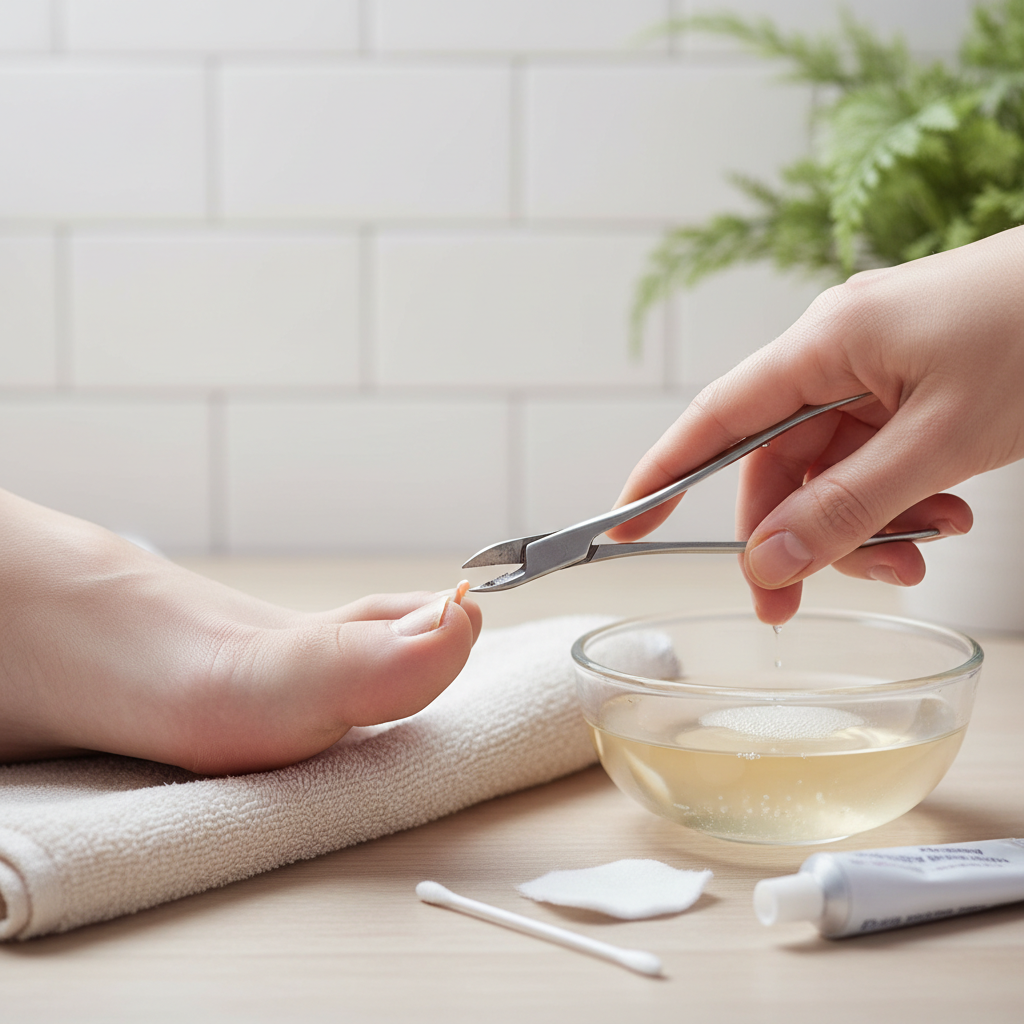
If you catch the condition early, the fastest way to find relief at home involves reducing inflammation and softening the nail. The soak-and-protect method is the gold standard for home care:
- Warm Salt Soaks: Soak the foot in warm water mixed with Epsom salts for 15–20 minutes, three times a day. This reduces swelling and eases pain.
- Antibiotic Ointment: Apply a topical over-the-counter antibiotic and cover with a clean bandage to prevent infection.
- Proper Footwear: Wear open-toed shoes or sandals until the inflammation subsides to remove pressure from the nail fold.
Key Takeaway: Avoid "bathroom surgery." Attempting to cut out the ingrown portion of the nail with unsterile tools at home significantly increases the risk of deep-tissue infection and rarely solves the underlying growth pattern.
Advanced/minimally invasive options
When home care fails, a podiatrist can perform a slant back or a simple nail avulsion. This involves numbing the toe with a local anesthetic and removing only the offending sliver of nail. This provides near-instant relief and allows the skin to heal without the constant irritation of the nail edge.
Surgical options
For chronic or recurring ingrown toenails, a partial nail avulsion with matrixectomy is the definitive solution. In this procedure, the podiatrist removes the narrow strip of nail and applies a chemical (usually phenol) to the nail root. This prevents that specific section of the nail from ever growing back, providing a permanent cure for the condition.
Recovery and what to expect
If treated conservatively at home, symptoms should improve within 3 to 5 days. However, if a minor surgical procedure is required, the recovery is still remarkably swift. Most patients can return to normal shoes within 24 hours and resume exercise within a week. The site may remain slightly tender for a few days, but the sharp, piercing pain is usually gone immediately after the procedure.
Prevention and self-care tips
- Trim straight across: Never round the corners of your toenails; keep them level with the tips of your toes.
- Check your shoe size: Ensure there is a thumb’s width of space between your longest toe and the end of your shoe.
- Use proper tools: Use clean, heavy-duty nail nippers rather than fingernail clippers.
- Inspect daily: If you have diabetes or poor circulation, check your feet daily for any signs of redness or irritation.
When to see a podiatrist
While home soaks help mild cases, certain symptoms require immediate professional intervention to prevent systemic infection:
- Signs of infection: If you notice pus, red streaks extending from the toe, or a foul odor.
- Fever: If foot pain is accompanied by a systemic fever or chills.
- Diabetes: If you have diabetes, neuropathy, or peripheral vascular disease, do not attempt home care; see a specialist immediately.
- Recurrence: If the nail becomes ingrown repeatedly in the same spot.
- No improvement: If the pain persists after three days of home soaking.