
Understanding Metatarsalgia: Why the Ball of Your Foot Hurts with Every Step
Discover the causes of pain in the ball of the foot, known as metatarsalgia. Learn about symptoms, diagnosis, and treatment options ranging from conservative care to minimally invasive procedures for lasting relief.
That sharp, burning sensation in the ball of your foot can turn a simple morning walk into a painful ordeal, making it feel as though you are constantly stepping on a stray pebble. This condition, medically known as metatarsalgia, is not a specific disease but rather a symptom of underlying mechanical issues or inflammation in the forefoot.
What's actually happening
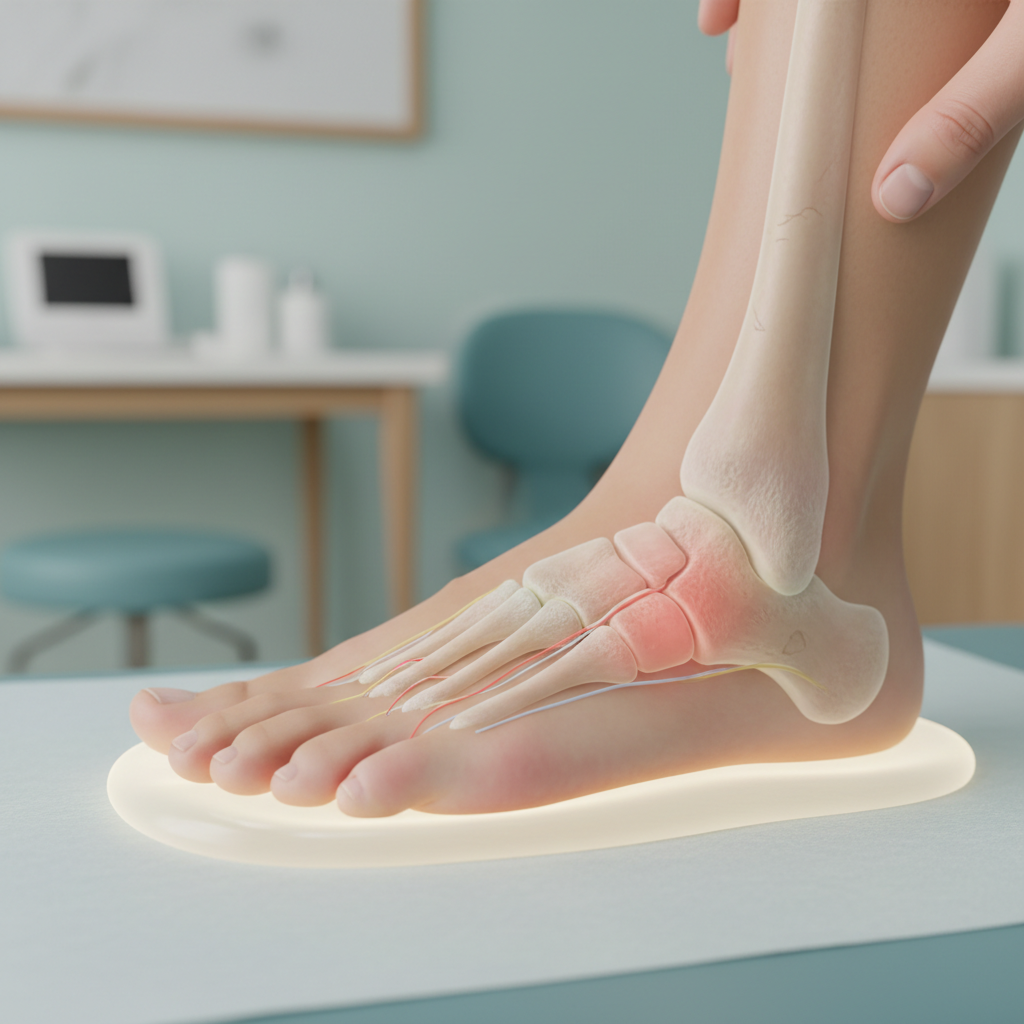
The ball of your foot is the padded area just before your toes, where the long metatarsal bones meet the phalanges (toe bones). During a normal walking gait, this area bears a significant portion of your body weight as you push off the ground. When the distribution of this weight becomes uneven, the heads of the metatarsal bones can press against the skin and nerves, leading to chronic inflammation of the surrounding tissues.
In many cases, the protective fatty pad that cushions these bones begins to thin or shift. This lack of padding, combined with repetitive pressure, irritates the synovial lining of the joints and the small nerves running between the bones. According to the American Academy of Orthopaedic Surgeons (AAOS), this mechanical stress is the primary driver of the dull ache or sharp stabs associated with the condition.
Signs and symptoms to watch for
Metatarsalgia symptoms usually develop gradually over time rather than appearing suddenly. You may notice:
- A sharp, aching, or burning pain in the ball of the foot.
- Pain that worsens when you stand, run, or walk—especially barefoot on hard surfaces.
- A sensation like there is a stone or a bunched-up sock in your shoe.
- Numbness or tingling in your toes (often a sign of nerve involvement).
- Increased discomfort when you flex your feet or push off during a stride.
Causes and risk factors
Several factors can contribute to the breakdown of mechanics in the forefoot. Often, it is a combination of your natural foot shape and external lifestyle factors. Common causes include:
- High-Intensity Activity: Runners and athletes are at higher risk due to the repetitive impact on the forefoot.
- Foot Deformities: Having a high arch can put extra pressure on the metatarsals. Similarly, hammertoes or bunions can shift weight onto the smaller toe joints.
- Improper Footwear: High heels transfer excessive weight to the front of the foot, while shoes with narrow toe boxes compress the metatarsal heads.
- Weight Gain: Carrying extra body weight increases the load on the forefoot during every step.
- Stress Fractures: Small cracks in the metatarsals can change how you walk, leading to secondary ball-of-foot pain.
Key Takeaway: Metatarsalgia is often a 'check engine light' for your foot mechanics; it signals that weight is not being distributed correctly across your forefoot.
How it's diagnosed
To determine the exact cause of your pain, a podiatrist will perform a physical examination, pressing on different areas of the foot to locate the source of tenderness. They will also evaluate your gait and standing posture. Diagnostic imaging is frequently used to rule out other conditions:
- X-rays: Used to check for stress fractures or alignment issues like bunions.
- Ultrasound: Helpful for identifying neuromas or bursitis (fluid-filled sacs) between the bones.
- MRI: Reserved for complex cases where soft tissue tears or bone marrow edema are suspected.
Treatment options
Conservative care
Most patients find significant relief through non-invasive adjustments. The goal is to offload the pressure from the painful metatarsal heads. This often includes the use of metatarsal pads, which are placed just behind the ball of the foot to redistribute weight. Custom orthotics may be prescribed to correct structural imbalances, and switching to shoes with a wide toe box and ample cushioning is essential. Icing the area for 15 minutes several times a day can help manage acute inflammation.
Advanced/minimally invasive options
If conservative measures are insufficient, advanced therapies can target the underlying inflammation. Corticosteroid injections may be used to reduce localized swelling quickly. In cases where the pain is caused by a pinched nerve (Morton’s Neuroma) or chronic bursitis, alcohol sclerosing injections or radiofrequency ablation may be considered to desensitize the irritated nerves without major surgery.
Surgical options
Surgery is typically a last resort, reserved for structural issues that cannot be fixed with padding. This may involve a metatarsal osteotomy, where the bone is shortened or realigned to better distribute weight. If a hammertoe or bunion is the primary cause of the pressure, correcting those deformities often resolves the ball-of-foot pain simultaneously.
Recovery and what to expect
For those utilizing conservative treatments, improvement is often felt within two to four weeks of consistent use of orthotics and proper shoes. However, full resolution may take several months if the inflammation was chronic.
If surgery is required, the timeline varies. Most patients can bear weight in a specialized surgical boot immediately or shortly after a metatarsal osteotomy, but a return to high-impact exercise like running usually takes 8 to 12 weeks. Adhering to physical therapy protocols is vital during this time to maintain joint flexibility.
Prevention and self-care tips
- Choose the right shoes: Look for footwear with a wide toe box and low heels to prevent toe crowding.
- Replace athletic shoes regularly: Running shoes lose their shock-absorbing capabilities after 300–500 miles.
- Maintain a healthy weight: Reducing the load on your feet can significantly decrease forefoot pressure.
- Strengthen your feet: Simple exercises like 'towel curls' with your toes can improve the intrinsic strength of the foot.
- Avoid walking barefoot: Use cushioned slippers or indoor shoes on hard floors to provide constant support.
When to see a podiatrist
While minor aches may resolve with rest, you should seek professional evaluation if you experience:
- Pain that persists for more than two weeks despite rest and icing.
- A visible lump or swelling in the ball of the foot.
- Tingling or a 'pins and needles' sensation that radiates into the toes.
- Pain so severe that it changes the way you walk or prevents daily activities.
- Discoloration or warmth in the forefoot, which may indicate an infection or acute injury.