
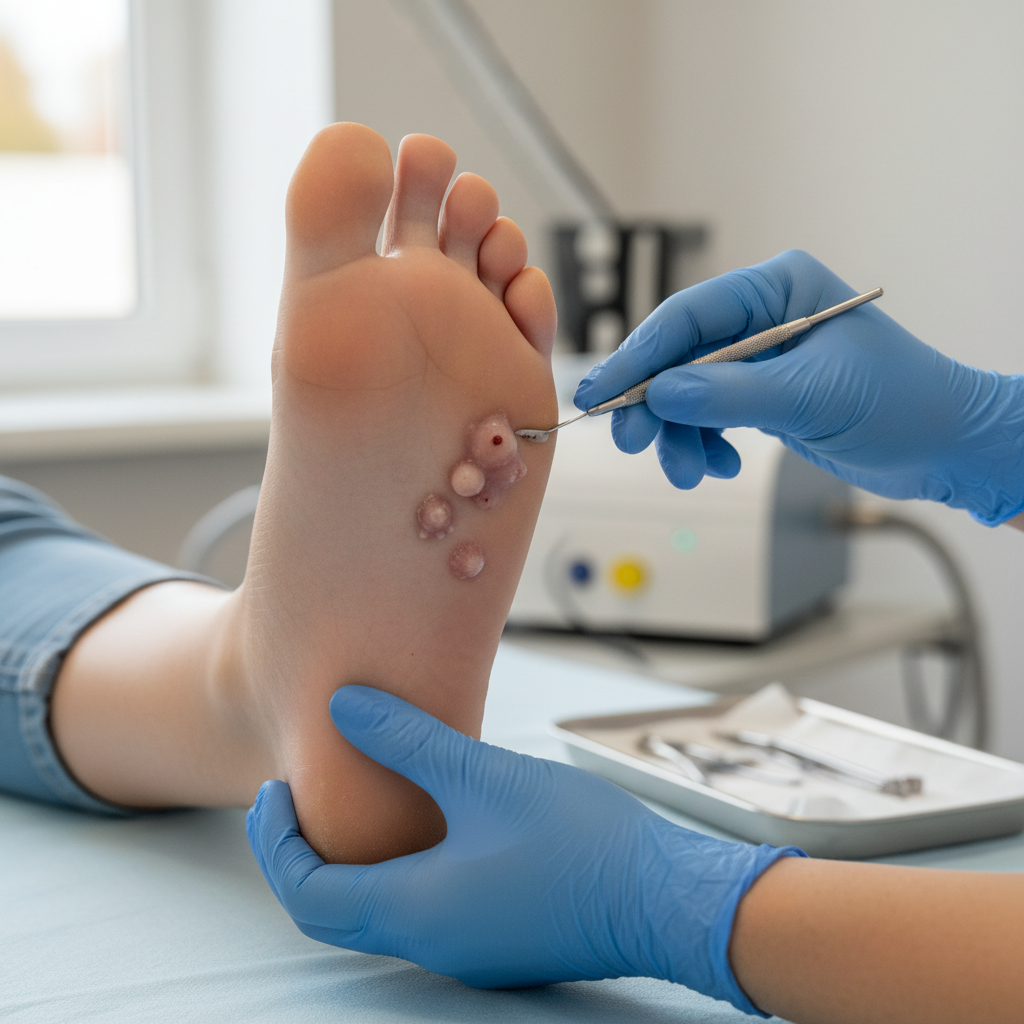
Stubborn Plantar Warts: Effective Treatments for Resistant Foot Warts
Struggling with a plantar wart that refuses to heal? Learn why these viral infections persist and discover the latest medical treatments, from immunotherapy to laser therapy, to finally clear your skin and walk pain-free.
That small, grainy bump on the bottom of your foot might feel like a pebble in your shoe, but its persistence suggests a much more stubborn intruder. While many skin issues resolve on their own, a plantar wart that refuses to budge is often a sign that the virus has successfully evaded your immune system's radar.
What's actually happening
Plantar warts are caused by the Human Papillomavirus (HPV), specifically strains that thrive in warm, moist environments. Unlike warts on your hands, plantar warts grow inward due to the constant pressure of standing and walking. This pressure pushes the lesion deep into the dermis, often beneath a thick layer of protective skin called a callus.
The virus infects the outermost layer of skin (the epidermis) through tiny cuts or weak spots. Once established, the virus hijacks the skin cells' machinery to replicate. This process also stimulates the growth of tiny blood vessels into the wart, which appear as the characteristic 'black dots'—often mistaken for seeds but actually small clotted capillaries.
Signs and symptoms to watch for
Identifying a plantar wart early can prevent it from spreading to other areas of the foot or to other people in your household. Look for these specific indicators:
- A small, fleshy, rough, and grainy growth on the sole of the foot.
- Hard, thickened skin (callus) over a well-defined 'spot' where a wart has grown inward.
- Black pinpoints, which are commonly called 'wart seeds' but are actually small, clotted blood vessels.
- Pain or tenderness when walking or standing, often described as a sharp, localized pressure.
- Interruption of the normal lines and ridges in the skin of your foot.
Causes and risk factors
The primary cause is direct contact with HPV. This can happen by walking barefoot in communal areas like locker rooms, public showers, or around swimming pools. However, not everyone who comes into contact with the virus develops a wart; your immune system's unique response plays a significant role.
Risk factors include being a child or teenager, as their immune systems are still developing defenses against various HPV strains. People with weakened immune systems or those who have had plantar warts in the past are also more susceptible. Additionally, excessive moisture or hyperhidrosis (sweaty feet) can soften the skin, making it easier for the virus to penetrate the surface.
How it's diagnosed
Diagnosis typically begins with a physical examination. A podiatrist will look for the hallmark signs, such as the absence of skin lines across the lesion. To confirm the diagnosis, the doctor may perform a 'pare and bleed' test, where they gently shave away the top layer of callus to reveal the underlying clotted capillaries.
In rare cases where a lesion is particularly resistant or appears atypical, a small punch biopsy may be performed. This involves taking a tiny sample of the tissue to be examined under a microscope, ensuring the growth is not a more serious skin condition, such as a localized squamous cell carcinoma.
Treatment options
When over-the-counter salicylic acid treatments fail, professional intervention becomes necessary to break the viral cycle.
Conservative care
Prescription-strength topical treatments are the first line of defense. These include high-concentration salicylic acid or Cantharidin, a substance derived from blister beetles. When applied by a professional, Cantharidin causes a blister to form under the wart, lifting it away from the healthy tissue. Cryotherapy, or freezing the wart with liquid nitrogen, is another common approach that triggers an immune response by damaging the viral cells.
Advanced and minimally invasive options
For warts that won't go away, immunotherapy is a powerful tool. This involves the application of chemicals or the injection of antigens (like the mumps or Candida antigen) directly into the wart. This 'wakes up' the immune system, teaching it to recognize and attack the HPV virus. Laser therapy is another modern option, using a focused beam of light to cauterize the tiny blood vessels feeding the wart, essentially starving it of nutrients.
Surgical options
If all other methods fail, a minor surgical procedure called curettage and electrodesiccation may be used. The podiatrist numbs the area and uses a small, spoon-shaped tool to scoop out the wart tissue, followed by an electric needle to destroy any remaining viral cells at the base. This is highly effective but is usually reserved for the most recalcitrant cases due to the risk of minor scarring.
Key Takeaway: A persistent plantar wart is a viral infection that has successfully hidden from your immune system; professional treatment focuses on exposing the virus so your body can finally eliminate it.
Recovery and what to expect
Recovery depends on the depth of the wart and the treatment method used. For topical or cryotherapy treatments, you can usually resume normal activities immediately, though the area may be tender for 24 to 48 hours. If a blister forms, it typically heals within a week.
For surgical or laser interventions, the timeline is slightly longer:
- Days 1-3: Keep the area clean and bandaged; some localized swelling or redness is normal.
- Week 1: A scab or crust will form over the site. Avoid picking at it to prevent secondary infection.
- Weeks 2-4: The skin begins to regenerate. You may need to wear a protective pad or 'donut' bandage to offload pressure while walking.
- Month 1-2: Full skin thickness returns, and the normal skin lines should reappear if the virus is eradicated.
Prevention and self-care tips
- Wear footwear in public: Always use flip-flops or water shoes in communal showers and pool decks.
- Keep feet dry: Change your socks daily and use foot powder if your feet tend to sweat excessively.
- Don't touch: Avoid picking at your own warts, as this can spread the virus to other parts of your foot or your hands.
- Sanitize tools: If you use a pumice stone or nail clipper on a wart, do not use it on healthy skin or share it with others.
- Boost your immunity: A healthy lifestyle supports your body’s ability to fight off viral infections like HPV.
When to see a podiatrist
- The wart is painful and interferes with your daily activities or gait.
- The lesion is bleeding, changing color, or increasing in size despite home treatment.
- You have multiple warts that are spreading (mosaic warts).
- You have diabetes or poor circulation in your feet, which increases the risk of infection.
- The 'wart' does not have the typical appearance and you are unsure of the diagnosis.