
Sprained vs. Broken Ankle: How to Tell the Difference and When to Seek Care
Discover the critical differences between an ankle sprain and a fracture. Learn about symptoms, diagnostic steps, and recovery timelines to ensure your feet stay healthy and mobile.
That sharp, sickening pop followed by a surge of heat in your ankle can leave you frozen in place, wondering if you have just suffered a temporary setback or a season-ending injury. Distinguishing between a severe sprain and a bone fracture is notoriously difficult because both injuries share nearly identical symptoms and immediate physical reactions.
What's actually happening
To understand the difference, we must look at the structures holding your lower leg together. An ankle sprain occurs when the tough, rubbery bands of tissue called ligaments are stretched beyond their limits or torn. These ligaments connect bone to bone and provide stability to the joint. According to the Mayo Clinic, most sprains involve the lateral ligaments on the outer side of the foot.
In contrast, a broken ankle (fracture) involves a crack or complete break in one or more of the bones that make up the ankle joint: the tibia (shinbone), the fibula (the smaller bone of the lower leg), or the talus. While a sprain is a soft-tissue injury, a fracture is a structural failure of the skeletal system. In some severe cases, a patient may suffer both a high-grade ligament tear and a fracture simultaneously.
Signs and symptoms to watch for
Because the nerves in the ankle react similarly to both types of trauma, you should look for these specific indicators:
- Immediate Swelling: Both injuries cause swelling, but a fracture often results in rapid, localized puffiness directly over the bone.
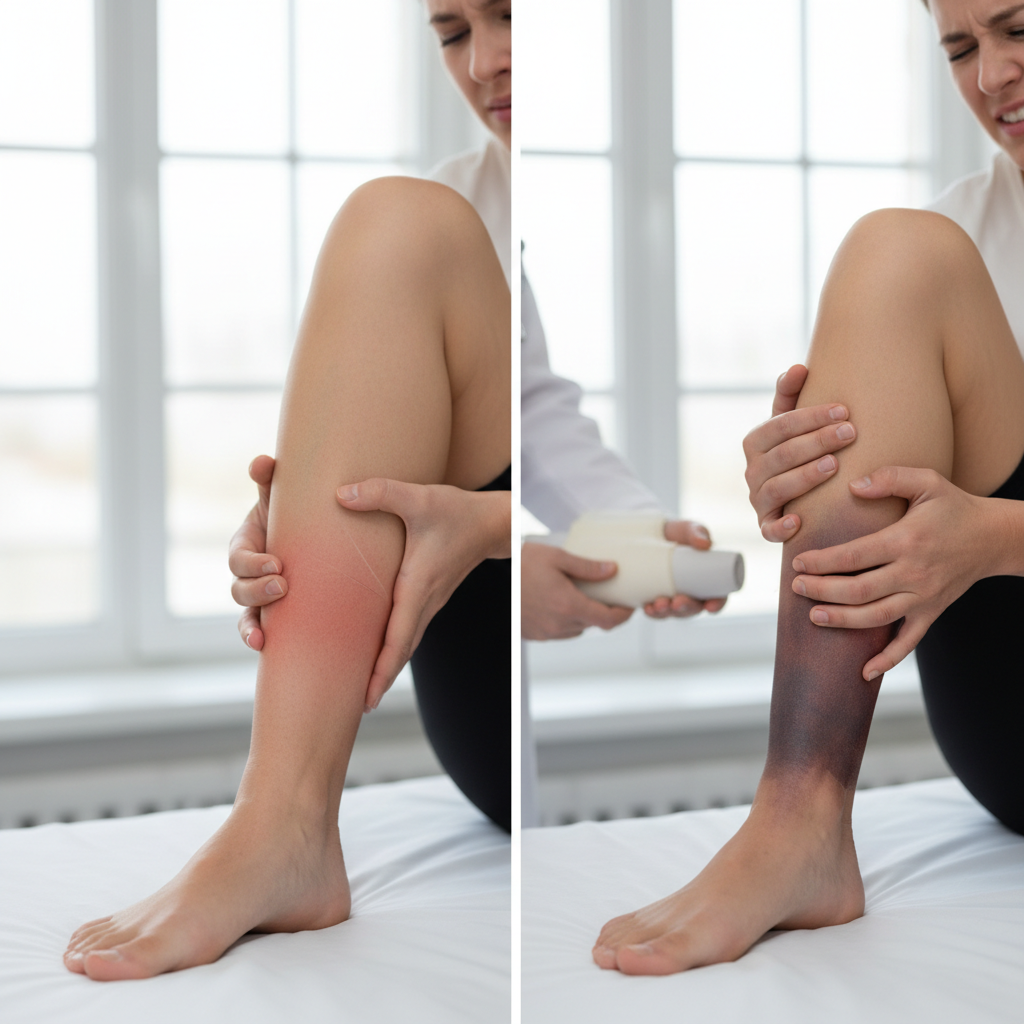
- Bruising and Discoloration: Dark purple or blue bruising that appears quickly usually suggests significant tissue damage or a break.
- Deformity: If the ankle looks crooked or out of place, it is almost certainly a fracture or a dislocation.
- Point Tenderness: Pain that is excruciating when pressing directly on the bony bumps (malleoli) of the ankle often indicates a break, whereas sprains usually hurt in the soft gaps between bones.
- The "Pop" vs. "Crack": Many patients report a dull popping sound with a sprain, while a loud, sharp snap is more common with a fracture.
Causes and risk factors
Ankle injuries typically happen when the foot rolls, turns, or twists beyond its normal range of motion. Common causes include:
- Tripping on an uneven sidewalk or stepping into a hole while running.
- Landing awkwardly from a jump during sports like basketball or volleyball.
- Direct impact to the ankle during a vehicular accident or a fall from a significant height.
Risk factors include wearing improper footwear for athletic activities, having a history of previous ankle injuries which may have left the ligaments loose, and participating in high-impact sports. Bone density issues, such as osteoporosis, also increase the risk of fractures from even minor trips.
How it's diagnosed
A professional evaluation is the only definitive way to distinguish between these two injuries. During an exam, a podiatrist will palpate the area to check for stability and tenderness. Diagnostic imaging is the gold standard for confirmation. X-rays are used to visualize bone breaks, while an MRI may be ordered if a high-grade ligament tear or cartilage damage is suspected. The "Ottawa Ankle Rules" are often used by clinicians to determine if an X-ray is medically necessary based on the patient's ability to bear weight and specific points of tenderness.
Treatment options
Conservative care
For mild to moderate sprains, the RICE protocol (Rest, Ice, Compression, Elevation) is the first line of defense. Non-steroidal anti-inflammatory drugs (NSAIDs) help manage pain and swelling. Physical therapy is often introduced early to maintain range of motion and strengthen the muscles surrounding the joint to prevent future instability.
Advanced/minimally invasive options
If a sprain is severe or a fracture is stable (non-displaced), a walking boot or a functional brace may be used. This allows for protected weight-bearing while the tissues knit back together. For certain ligament injuries, regenerative medicine injections or specialized bracing may be used to accelerate the natural healing process without the need for open surgery.
Surgical options
Surgery is typically reserved for unstable fractures where the bones have shifted out of alignment or for chronic ligament instability that hasn't responded to therapy. In a fracture repair (Open Reduction Internal Fixation), a surgeon uses small plates and screws to hold the bone in the correct position. For chronic sprains, a ligament reconstruction may be performed to tighten the joint.
Key Takeaway: Never assume an injury is "just a sprain" because you can still walk on it. Many people walk on minor fractures, which can lead to improper healing, chronic pain, and early-onset arthritis.
Recovery and what to expect
Recovery timelines vary significantly based on the severity of the damage. A mild (Grade I) sprain may feel better within 1 to 3 weeks. A moderate (Grade II) sprain often requires 4 to 6 weeks of rehabilitation.
A broken ankle requires a much longer commitment. Bone healing typically takes a minimum of 6 to 8 weeks, followed by several months of physical therapy to regain strength and flexibility. Most patients return to full activity within 4 to 6 months, though elite athletes may require longer for sport-specific conditioning.
Prevention and self-care tips
- Strengthen your core and legs: Better balance reduces the likelihood of a fall.
- Choose the right shoes: Wear footwear designed for your specific activity and replace worn-out athletic shoes every 300–500 miles.
- Warm up: Dynamic stretching before exercise prepares the ligaments for sudden movements.
- Listen to your body: If you feel a "twinge" or minor ache, rest before it becomes a major tear.
When to see a podiatrist
You should seek professional medical attention immediately if you experience any of the following:
- Inability to take four steps without significant pain.
- Numbness or tingling in the foot or toes.
- Visible deformity or bones protruding through the skin.
- Pain directly on the bony prominences of the ankle.
- Swelling or bruising that does not improve after 48 hours of home care.