
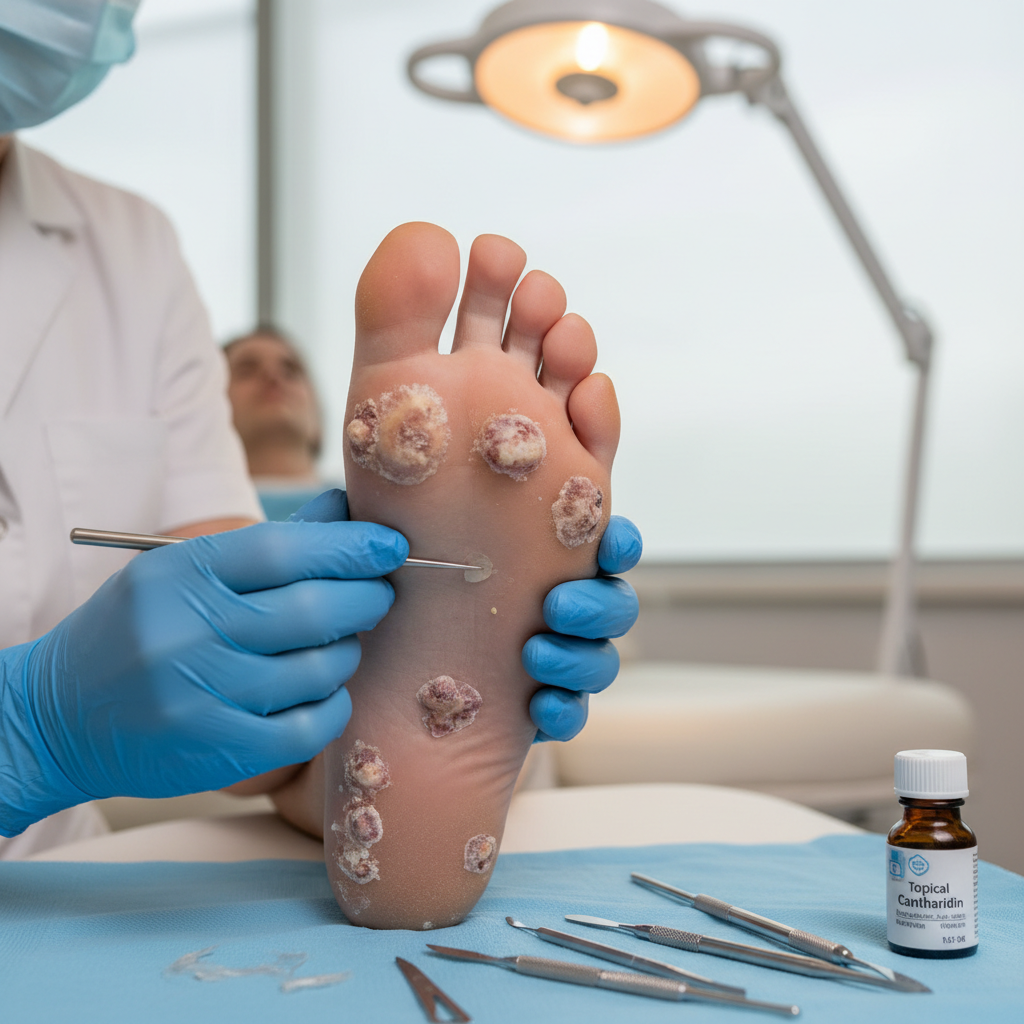
Persistent Plantar Warts: Effective Strategies for Stubborn Foot Warts
Struggling with a plantar wart that refuses to budge? Learn why these stubborn viral infections persist, how they are diagnosed, and the advanced treatment options available to finally clear your skin and restore comfort to your stride.
That tiny, pebble-like sensation in your shoe might feel like a minor annoyance, but when a plantar wart refuses to disappear after months of home treatment, it becomes a source of genuine frustration and pain. These stubborn viral intruders are notorious for their resilience, often digging deep into the thick skin of your soles where they can evade standard over-the-counter remedies.
What's actually happening
A plantar wart, or verruca plantaris, is a benign skin growth caused by the Human Papillomavirus (HPV), specifically types 1, 2, 4, 60, or 63. Unlike warts on your hands, plantar warts are pushed inward by the pressure of standing and walking. This creates a callus-like layer of skin over the top of the virus, effectively shielding it from topical treatments.
The virus thrives in the epidermis, the outer layer of your skin, where it hijacks your cells to produce more viral particles. Because the virus stays in the skin and doesn't enter the bloodstream, your immune system may not always recognize it as a threat, which is why some warts can persist for years without professional intervention.
Signs and symptoms to watch for
Identifying a plantar wart can be tricky, as they often resemble corns or calluses. Look for these specific indicators:
- A small, fleshy, rough, grainy growth on the bottom of your foot.
- Pinpoint black dots, which are actually tiny, clotted blood vessels (often mistakenly called "wart seeds").
- A lesion that interrupts the normal lines and ridges in the skin of your foot.
- Pain or tenderness when squeezing the sides of the lesion rather than pressing directly on it.
- A well-defined boundary where the growth meets the healthy skin.
Causes and risk factors
Transmission occurs through direct contact with the virus. HPV thrives in warm, moist environments like locker rooms, public showers, and swimming pool decks. The virus enters the body through tiny cuts, scrapes, or weak spots on the bottom of the feet.
Certain factors increase your susceptibility to persistent infections:
- Weakened Immune System: Those with compromised immunity have a harder time clearing the virus naturally.
- Age: Children and teenagers are more frequently affected as their immune systems haven't yet built up resistance to these specific HPV strains.
- Skin Barrier Issues: People with excessively dry, cracked skin or hyperhidrosis (sweaty feet) provide easier entry points for the virus.
- Repeated Exposure: Walking barefoot in high-traffic communal areas significantly raises your risk.
How it's diagnosed
A podiatrist can usually diagnose a plantar wart through a simple physical examination. Dr. Eskander will look for the characteristic black dots and the disruption of skin striations. In some cases, a small sample of the lesion (a shave biopsy) may be taken to confirm the diagnosis and rule out other skin conditions, such as a localized granuloma or, rarely, a skin malignancy.
Treatment options
When a wart won't go away, it usually means the viral load is high or the protective callus is too thick for home kits to penetrate.
Conservative care
Professional-grade salicylic acid is much stronger than what is found in drugstores. A podiatrist will carefully debride (thin down) the overlying callus before applying the acid, allowing it to reach the viral tissue. Cryotherapy, or freezing the wart with liquid nitrogen, is another common first-line professional treatment that triggers an immune response by causing a small blister to form around the wart.
Advanced/minimally invasive options
For stubborn cases, immunotherapy may be used. This involves applying chemicals like squaric acid or injecting antigens (such as the mumps or Candida antigen) directly into the wart to "wake up" your immune system so it recognizes and attacks the HPV. Laser therapy is another powerful tool; it uses a focused beam of light to cauterize the tiny blood vessels feeding the wart, essentially starving the virus of nutrients.
Surgical options
If all else fails, electrosurgery and curettage may be necessary. Under local anesthesia, the podiatrist uses an electric needle to destroy the wart tissue and then carefully removes it with a small, spoon-shaped tool. While effective, this is typically reserved for the most recalcitrant cases due to the risk of minor scarring.
Key Takeaway: Plantar warts persist because they hide under thick skin and evade the immune system; professional treatment focuses on removing that barrier and triggering a localized immune response.
Recovery and what to expect
Recovery depends heavily on the treatment method used. For cryotherapy or acid treatments, you may need multiple sessions spaced 2–3 weeks apart. You can usually return to normal activities immediately, though there may be some localized soreness.
If surgical removal is performed, the site may take 2–4 weeks to heal completely. During this time, you will need to keep the area clean and dry to prevent secondary bacterial infections. Unlike a common cold, your body does not always develop permanent immunity to the specific HPV strain, so reinfection is possible if preventive measures aren't taken.
Prevention and self-care tips
- Wear footwear: Always use flip-flops or water shoes in public showers and pool areas.
- Keep feet dry: Change your socks daily and use foot powder if your feet sweat excessively.
- Don't touch: Avoid picking at or scratching a wart, as this can spread the virus to other parts of your foot or to your hands.
- Disinfect tools: If you use a pumice stone or nail clipper on a wart, do not use it on healthy skin or share it with others.
- Boost your health: Maintaining a healthy lifestyle helps your immune system stay ready to fight off viral intruders.
When to see a podiatrist
- The wart is bleeding, painful, or changing color.
- You have attempted over-the-counter treatments for several weeks with no improvement.
- The wart is interfering with your ability to walk or exercise comfortably.
- You have diabetes or poor circulation in your feet (never attempt home wart removal in these cases).
- New warts are appearing or spreading rapidly across the foot.