
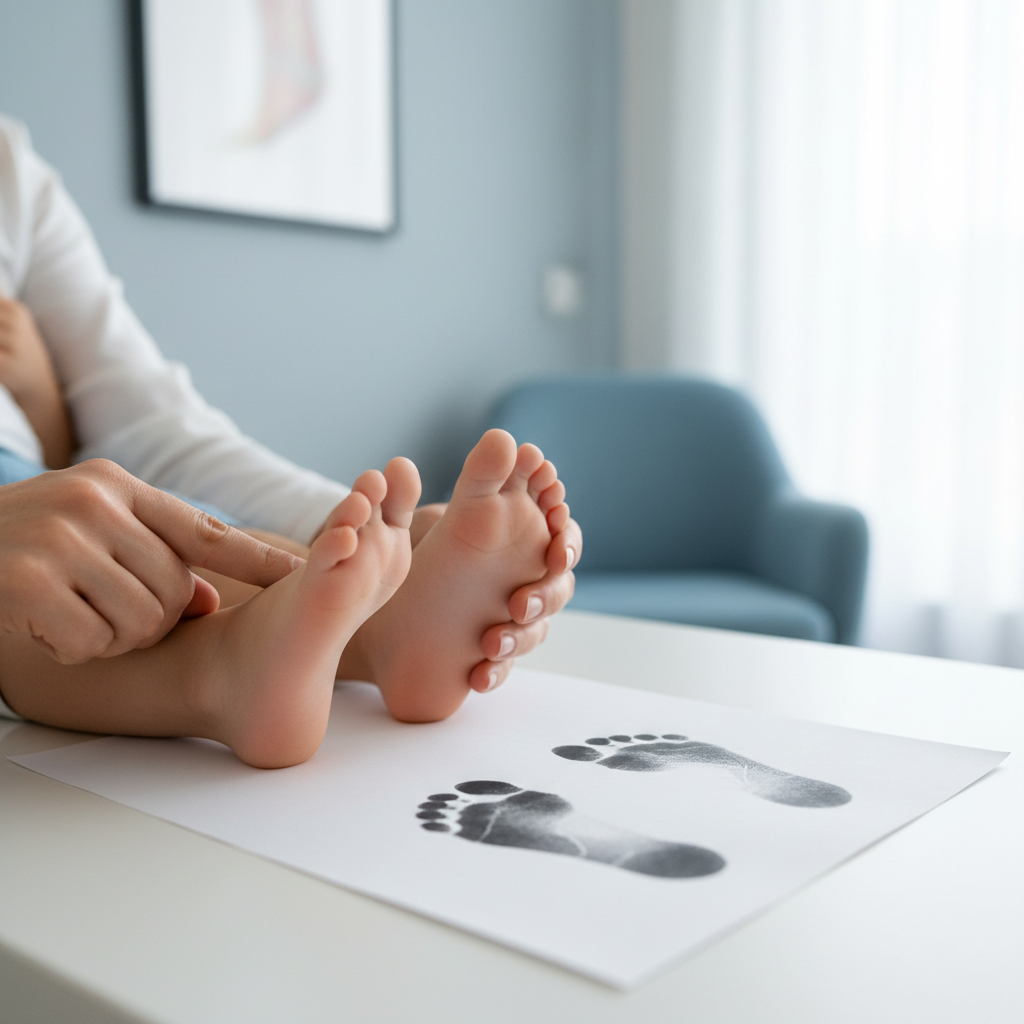
Pediatric Flat Feet: Is Your Child’s Foot Development Normal or a Cause for Concern?
Discover how to distinguish between normal pediatric foot development and symptomatic flat feet. Learn about flexible vs. rigid arches, common symptoms, and when to seek professional evaluation from a podiatrist for your child's mobility.
That soft, pillowy look of a toddler’s foot often hides a complex architectural development that leaves many parents wondering if their child will ever develop a visible arch. While most children appear to have flat feet early in life, distinguishing between a natural developmental stage and a structural issue is key to ensuring lifelong mobility.
What's actually happening
In infants and toddlers, the arch of the foot is typically masked by a thick layer of subcutaneous fat, which provides cushioning as they learn to navigate their first steps. Beneath this padding, the bones and joints are still primarily composed of soft cartilage rather than hard bone. As a child grows, the tendons and ligaments tighten, and the bones ossify, typically revealing a visible arch by age six or seven.
Most pediatric cases are classified as flexible flatfoot. This means the foot appears flat when the child is standing, but an arch magically reappears when they sit down or rise onto their tiptoes. This occurs because the ligaments that support the arch are still highly elastic. According to the American Academy of Orthopaedic Surgeons (AAOS), this is a normal part of musculoskeletal development and rarely requires aggressive intervention.
Signs and symptoms to watch for
While many children with flat feet experience no discomfort, you should monitor for physical and behavioral changes that suggest the foot structure is causing strain:
- Pain or cramping in the feet, ankles, or lower legs, especially after physical activity.
- Outward tilting of the heel bone (valgus position) when viewed from behind.
- Changes in gait, such as clumsiness, frequent tripping, or an unusual walking pattern.
- Withdrawal from sports or active play because their feet "feel tired."
- Uneven shoe wear, where the inner side of the sole degrades much faster than the outer side.
Causes and risk factors
Genetics play a primary role in foot structure; if parents have low arches, their children are more likely to follow suit. However, other factors can influence the development of the arch:
- Ligamentous Laxity: Some children are born with naturally looser ligaments, making the arch more prone to collapsing under weight.
- Achilles Tendon Tightness: A tight heel cord can limit the ankle's range of motion, forcing the foot to flatten to compensate during movement.
- Tarsal Coalition: This is a less common condition where two or more bones in the midfoot or hindfoot grow together, creating a rigid flatfoot that does not resolve with age.
- Neuromuscular Conditions: Disorders like cerebral palsy or muscular dystrophy can affect muscle tone and foot alignment.
How it's diagnosed
A clinical evaluation begins with a physical examination of how your child stands and walks. The podiatrist will perform the "Great Toe Extension Test" or the "Hubscher Maneuver," where lifting the big toe should naturally recreate the arch in a flexible foot.
If the foot remains flat regardless of position, or if there is significant pain, imaging may be necessary. X-rays are the gold standard for viewing bone alignment under weight-bearing conditions. In rare cases where a bony bridge (coalition) or soft tissue injury is suspected, an MRI or CT scan may be ordered to provide a detailed view of the internal structures.
Treatment options
Conservative care
For the vast majority of children, treatment is focused on managing symptoms rather than "creating" an arch. If the child is asymptomatic, observation is usually the best course of action. For those with mild discomfort, activity modification and stretching exercises for the Achilles tendon can provide significant relief. Supportive, well-fitted athletic shoes with a firm heel counter are often the first line of defense.
Advanced/minimally invasive options
If conservative shoes aren't enough, custom orthotics may be prescribed. These are medical-grade inserts molded to your child’s foot to provide structural support and improve biomechanical efficiency. While orthotics do not permanently change the shape of the foot, they can prevent secondary pain in the knees and hips. Physical therapy may also be utilized to strengthen the posterior tibial tendon, which is the primary stabilizer of the arch.
Surgical options
Surgery is rarely considered for pediatric flat feet and is typically reserved for rigid flatfoot or cases where severe pain persists despite years of conservative treatment. Procedures might include lengthening a tight Achilles tendon or, in the case of tarsal coalition, removing the abnormal bony bridge to restore motion.
Key Takeaway: Most pediatric flat feet are a "flexible" developmental phase that resolves by age seven; however, if your child complains of pain or avoids activity, a professional evaluation is necessary to rule out structural issues.
Recovery and what to expect
For children using orthotics or physical therapy, improvement in comfort is often noticed within 4 to 6 weeks. Because children grow rapidly, orthotic prescriptions usually need to be updated every 12 to 18 months to match their changing foot size. If surgery is required, the timeline is more extensive, often involving 6 to 8 weeks in a cast or boot followed by several months of rehabilitation to return to full sports participation.
Prevention and self-care tips
- Encourage varied movement: Allow children to play on different surfaces like grass or sand to help strengthen intrinsic foot muscles.
- Check shoe fit regularly: Children can outgrow shoes in months; tight shoes can interfere with natural foot expansion.
- Maintain a healthy weight: Excess weight puts additional stress on developing arches and ligaments.
- Monitor for fatigue: If your child frequently asks to be carried during short walks, it may be a sign of foot fatigue rather than laziness.
When to see a podiatrist
- The foot is stiff or rigid rather than flexible.
- Your child experiences persistent pain in the foot, ankle, or shin.
- One foot looks significantly flatter than the other.
- The child develops a sudden limp or changes their walking style to avoid pressure.
- Physical activity is limited by foot discomfort or "heaviness."