
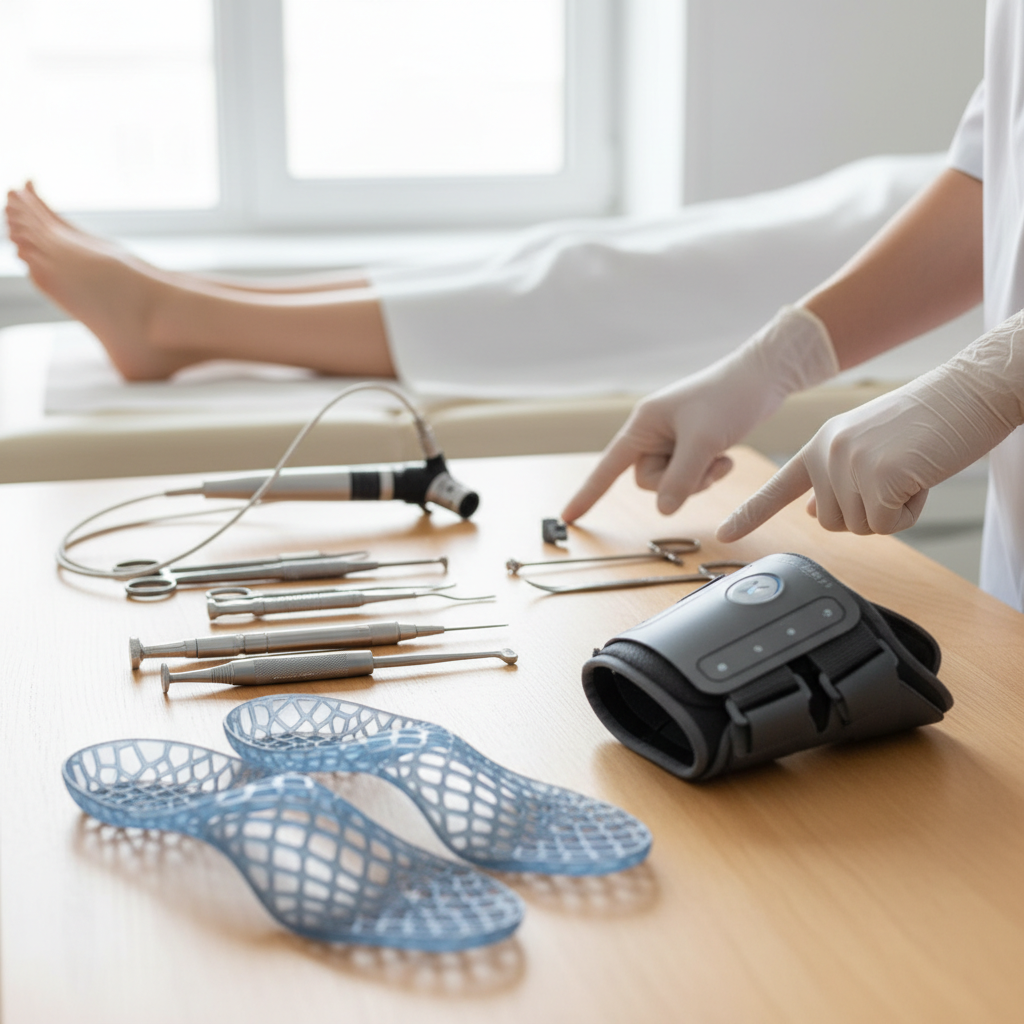
Modern Advances in Podiatry: From 3D-Printed Orthotics to Minimally Invasive Surgery
Discover how cutting-edge technology is transforming foot and ankle care. Learn about 3D-printed custom orthotics, advanced bracing systems, and the benefits of minimally invasive surgical techniques for faster recovery and better patient outcomes.
For decades, the standard approach to foot and ankle care relied on bulky casts, heavy incisions, and lengthy recovery periods spent away from the activities you love. Today, a quiet revolution in medical technology has transformed podiatry, replacing "wait and see" traditionalism with precision-engineered 3D orthotics and surgical techniques that require nothing more than a tiny stitch.
What's actually happening
Modern podiatry has shifted from focusing solely on treating symptoms to utilizing high-resolution technology to understand the functional mechanics of your gait. At its core, the field now integrates biomechanical engineering with advanced imaging.
In the past, a podiatrist might take a messy plaster mold of your foot to create an orthotic, which provides a static "snapshot" of your foot's shape. Modern advancements allow for dynamic scanning, capturing how your foot moves under pressure in real-time. Similarly, surgical interventions have moved from large, open exposures of bone and joint to minimally invasive surgery (MIS). This approach uses specialized micro-instruments and high-definition fluoroscopy (live X-ray) to perform corrective work through portals often no larger than a grain of rice. By preserving the surrounding soft tissue and blood supply, these technologies work with your body's natural healing processes rather than disrupting them.
Signs and symptoms to watch for
Technological advancements aren't just for major surgeries; they are often the solution for persistent, nagging pains that haven't responded to traditional methods. You may be a candidate for modern podiatric interventions if you experience:
- Sharp, stabbing pain in the heel (plantar fasciitis) that is worse with your first steps in the morning.
- Localized swelling and tenderness around the "knuckle" of the big toe, indicating a developing bunion.
- Numbness or a sensation of "walking on a marble" in the ball of the foot (Morton's neuroma).
- Visible toe deformities, such as hammertoes, that cause painful rubbing against your shoes.
- Consistent ankle instability or "giving way" during athletic activities or walking on uneven surfaces.
- Chronic foot fatigue that makes it difficult to stand for more than two hours at a time.
Causes and risk factors
The need for advanced podiatric care often stems from a combination of hereditary mechanics and lifestyle demands. Understanding these risks helps determine which high-tech solution—whether it is a 3D-printed device or a micro-procedure—is most appropriate for you.
- Abnormal Biomechanics: Flat feet (overpronation) or high arches (supination) create uneven pressure distribution. Over time, this wears down cartilage and strains tendons.
- Repetitive Micro-trauma: Athletes and professionals who spend all day on their feet subject their lower extremities to thousands of pounds of force daily.
- Systemic Conditions: Issues like diabetes or rheumatoid arthritis can change the structure of the foot, requiring precision interventions to prevent complications.
- Aging and Collagen Loss: As we age, the fat pads on the bottom of our feet thin out, and tendons lose their elasticity, making the precision of modern orthotics essential for maintaining mobility.
- Improper Footwear: Long-term use of shoes with narrow toe boxes or lack of support often accelerates the progression of bunions and hammertoes.
How it's diagnosed
Diagnostic technology has evolved to see what the naked eye and traditional X-rays might miss. A modern assessment typically involves several layers of digital analysis:
- Digital Gait Analysis: Instead of just watching you walk, podiatrists now use pressure-sensing mats or wearable sensors. These tools provide a "heat map" of your foot strike, showing exactly where your weight shifts during each phase of your step.
- 3D Volumetric Scanning: Laser scanners create a perfect digital twin of your foot. This allows for the measurement of arch height, forefoot width, and heel alignment within a fraction of a millimeter.
- High-Resolution Diagnostic Ultrasound: This allows for a real-time "live look" at tendons, ligaments, and nerves without the radiation of a CT scan or the closed space of an MRI. It is particularly effective for diagnosing plantar fasciitis and neuromas.
- Digital Radiography: Modern X-rays provide instant, high-contrast images that can be magnified to detect stress fractures or subtle joint narrowing that older film could not easily show.
Treatment options
The beauty of modern podiatry lies in the spectrum of care. We no longer have to choose between "doing nothing" and "major surgery." Technology has filled the gap with a wide range of middle-ground treatments.
Conservative care
The most significant advancement in non-surgical care is the move toward 3D-printed prescription orthotics. Unlike traditional "off-the-shelf" inserts or older plastic molds, these devices are engineered using lattice structures. This means one part of the orthotic can be stiff for support while another part is flexible for comfort, all within the same piece of material.
Other advanced conservative options include Extracorporeal Shockwave Therapy (ESWT). This device sends high-energy acoustic pulses into damaged tissue to stimulate blood flow and trigger a healing response in chronic conditions like Achilles tendonitis. It essentially "re-boots" the healing process in tissues that have become stuck in a state of chronic inflammation.
Advanced or minimally invasive options
When conservative care isn't enough, minimally invasive technology offers a bridge to recovery. Minimally Invasive Surgery (MIS) is now used frequently for bunion correction, hammertoe repair, and heel spur removal.
Instead of an incision that spans several inches, the surgeon uses a small, high-speed burr through a 3mm opening. This technique minimizes the disruption to the skin and "envelope" of the foot. Because the soft tissues (the "wrapping" around the bone) are left largely intact, there is significantly less post-operative swelling and pain compared to traditional open surgery.
Surgical options
In cases of severe deformity or end-stage arthritis, advanced surgical technology focuses on biocompatible implants and 3D-printed titanium cages. For example, in complex ankle fusions or reconstructions, custom-printed implants can be designed to fit a patient's specific bone voids. These modern materials are designed to integrate with your natural bone (osseointegration), leading to a much more stable and long-lasting result than the "one size fits all" plates and screws of the past.
Key takeaway: Modern podiatry is defined by precision. By using 3D scanning for orthotics and micro-incisions for surgery, we can target the exact source of pain while preserving the healthy tissue around it, leading to faster healing and better long-term function.
Recovery and what to expect
The "modern" recovery experience is vastly different from the week-long hospital stays or months in a cast associated with older generations. While every patient is unique, modern techniques generally follow this timeline:
- Days 1–3: Post-procedure discomfort is typically managed with icing and elevation. Due to the small incisions in MIS, many patients report needing significantly less pain medication than expected.
- Weeks 1–2: Most patients are able to "weight-bear as tolerated" in a specialized surgical boot or shoe. Stitches, if any, are usually removed or dissolved during this window.
- Weeks 3–6: Transitions back into supportive athletic shoes often begin here. For those using 3D-printed orthotics, this is the "break-in" period where the gait begins to normalize.
- Months 2–3: Patients typically return to high-impact activities, such as running or sports, with the benefit of corrected alignment and reduced structural strain.
Prevention and self-care tips
While technology can fix many problems, maintaining those gains requires proactive self-care. Use these evidence-based strategies to protect your foot health:
- Dynamic Stretching: Focus on the calf muscles and the "Great Toe" joint. Tightness in the back of the leg (the posterior chain) is a leading cause of foot strain.
- Rotation of Footwear: Change your shoes every 300 to 500 miles (or every 6 months if you are on your feet all day). This ensures the structural foam hasn't collapsed.
- Moisture Management: Use moisture-wicking socks to prevent skin breakdown and fungal infections, particularly if you are active in the Irvine heat.
- Gradual Progression: When starting a new exercise routine, use the "10% rule"—never increase your mileage or intensity by more than 10% per week to avoid stress fractures.
- Home Inspection: Especially for those with decreased sensation (neuropathy), inspect the bottoms of your feet daily using a mirror to catch minor nicks or blisters before they become serious infections.
When to see a podiatrist
You should not wait until pain prevents you from walking to seek an evaluation. Early intervention with modern technology often prevents the need for surgery later. Schedule an appointment if you notice:
- Pain that persists for more than 72 hours despite rest, ice, and elevation.
- A change in the shape of your foot, such as a flattening arch or a protruding bump on the side of the toe.
- Tingling, burning, or "electric" sensations in the toes or heels.
- Discoloration or thickening of the toenails, which could indicate a fungal infection or subungual trauma.
- New or enlarging skin lesions, moles, or sores that are slow to heal.
- Inability to perform daily tasks or exercise without significant discomfort.