Is It Safe to Pop a Blister on Your Foot? A Podiatrist’s Guide to Safe Healing
Discover whether you should pop that painful foot blister and learn the safest ways to manage friction injuries. This guide covers anatomy, infection risks, and professional treatment options for fast recovery.
That stinging, fluid-filled bubble on your heel or toe can turn a simple walk into a painful ordeal, leaving you tempted to reach for a needle just to relieve the pressure. While the urge to pop a blister is strong, doing so prematurely can transform a minor irritation into a serious skin infection.
What's actually happening
A blister, known clinically as a vesicle or bulla, is the body’s natural defense mechanism against localized trauma. When your skin is subjected to repetitive friction, the upper layer (the epidermis) separates from the layers beneath it. To protect the raw tissue underneath, your body rushes clear fluid—called serum—into the gap. This fluid acts as a sterile cushion, shielding the sensitive lower layers while new skin cells regenerate. According to the American Academy of Dermatology, the intact skin over a blister serves as a natural bandage, keeping bacteria out while the healing process unfolds beneath the surface.
Signs and symptoms to watch for
Identifying the type of blister you have is the first step in determining the right treatment. Most friction blisters share common characteristics:
- A raised, translucent bubble filled with clear fluid.
- Tenderness or a burning sensation when pressure is applied.
- Redness and localized swelling around the perimeter of the bubble.
- Increased pain when wearing shoes or walking.
Causes and risk factors
Blisters are rarely a mystery; they are almost always the result of mechanical forces or environmental changes. Common culprits include:
- Friction and Shearing: New or ill-fitting shoes rubbing against the heel or toes.
- Moisture: Sweaty feet soften the skin, making it more susceptible to tearing.
- Foot Deformities: Bunions or hammertoes create high-pressure points that rub against footwear.
- Activity Spikes: Sudden increases in walking or running mileage before the skin has toughened.
How it's diagnosed
Most blisters are diagnosed through a simple physical examination. During a visit, a podiatrist will evaluate the size, location, and color of the fluid. If the blister appears unusual or recurs without a clear cause, we may investigate underlying factors such as fungal infections, allergic reactions (contact dermatitis), or even circulatory issues. For patients with diabetes, any blister requires immediate professional attention, as reduced blood flow and nerve damage can turn a simple blister into a non-healing ulcer.
Key Takeaway: Your skin is your primary barrier against infection; keeping a blister intact is the fastest way to ensure the tissue underneath heals without complication.
Treatment options
Conservative care
For small, painless blisters, the best approach is to leave them alone. Cover the area with a loose bandage or a specialized "blister pad" to reduce further friction. If the blister is in a high-pressure area, you can create a "donut" pad using moleskin to surround the blister without touching the roof of the bubble itself.
Advanced/minimally invasive options
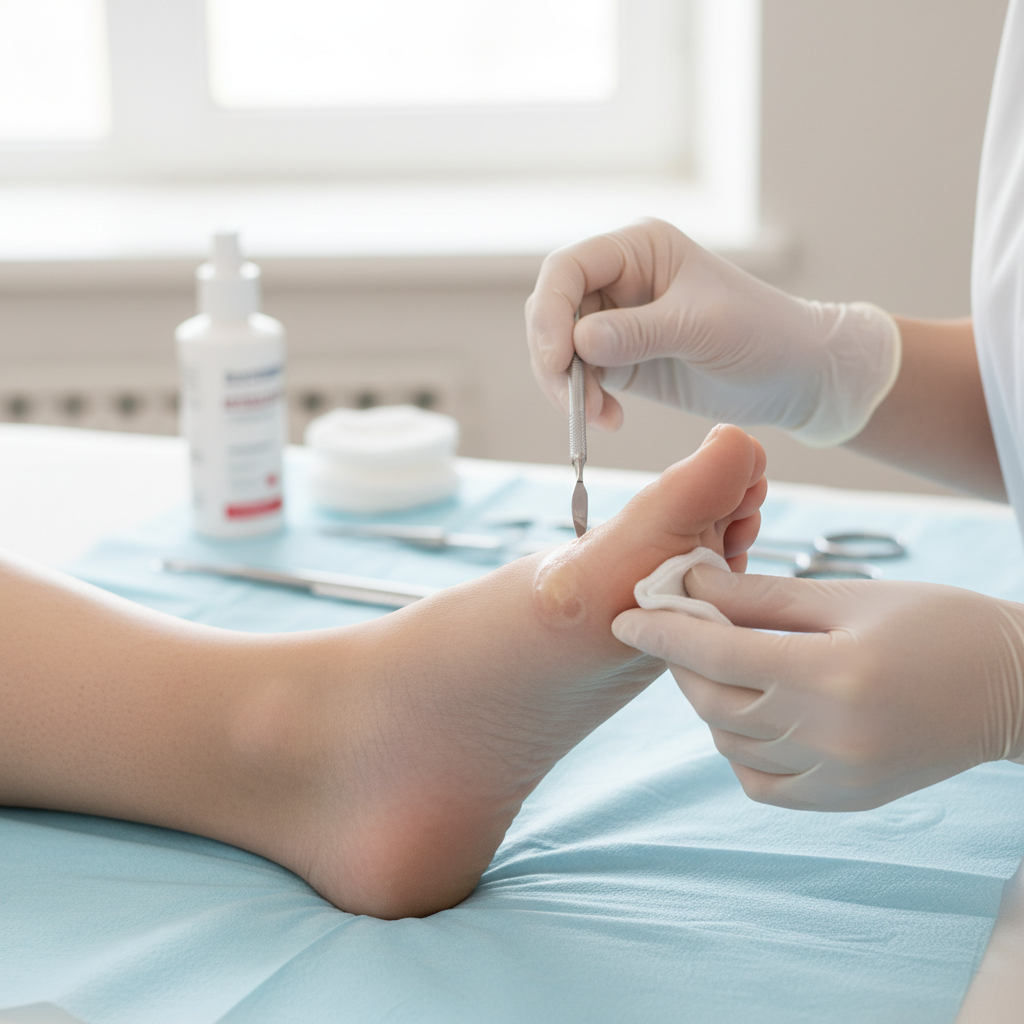
If a blister is exceptionally large, tense, or located where it will inevitably rupture, a podiatrist may perform a sterile drainage. This involves using a surgical blade or needle to create a small opening at the base, allowing the fluid to escape while keeping the overlying skin (the "roof") intact to protect the wound bed. We then apply clinical-grade antimicrobial dressings to prevent bacterial entry.
Surgical options
While a single blister rarely requires surgery, chronic blistering may indicate a structural issue. If a bone spur or toe deformity is the root cause, surgical correction of the bone may be recommended to permanently eliminate the pressure point and prevent future skin breakdown.
Recovery and what to expect
With proper care, a friction blister typically heals within 7 to 10 days. Within the first 48 hours, the body begins to reabsorb the fluid if the blister remains intact. By day five, a new layer of skin has usually formed underneath, and the old skin will naturally dry up and peel away. If the blister was drained professionally, the soreness usually subsides immediately, though the area must remain covered and dry for several days to prevent secondary infection.
Prevention and self-care tips
- Moisture-wicking socks: Avoid 100% cotton; instead, choose synthetic blends or wool that pull sweat away from the skin.
- Proper fit: Ensure there is a thumb’s width of space between your longest toe and the end of your shoe.
- Lubrication: Apply anti-friction balms or petroleum jelly to known "hot spots" before long walks.
- Double-layering: Wearing two pairs of thin socks can allow the friction to happen between the sock layers rather than against your skin.
When to see a podiatrist
You should seek professional care if you notice any of the following "red flag" symptoms:
- The fluid inside the blister is cloudy, yellow, or green (pus).
- Red streaks extending away from the blister site.
- The area is hot to the touch or excessively swollen.
- You have a fever or chills accompanying the foot pain.
- You have diabetes or peripheral neuropathy and discover a new blister.