
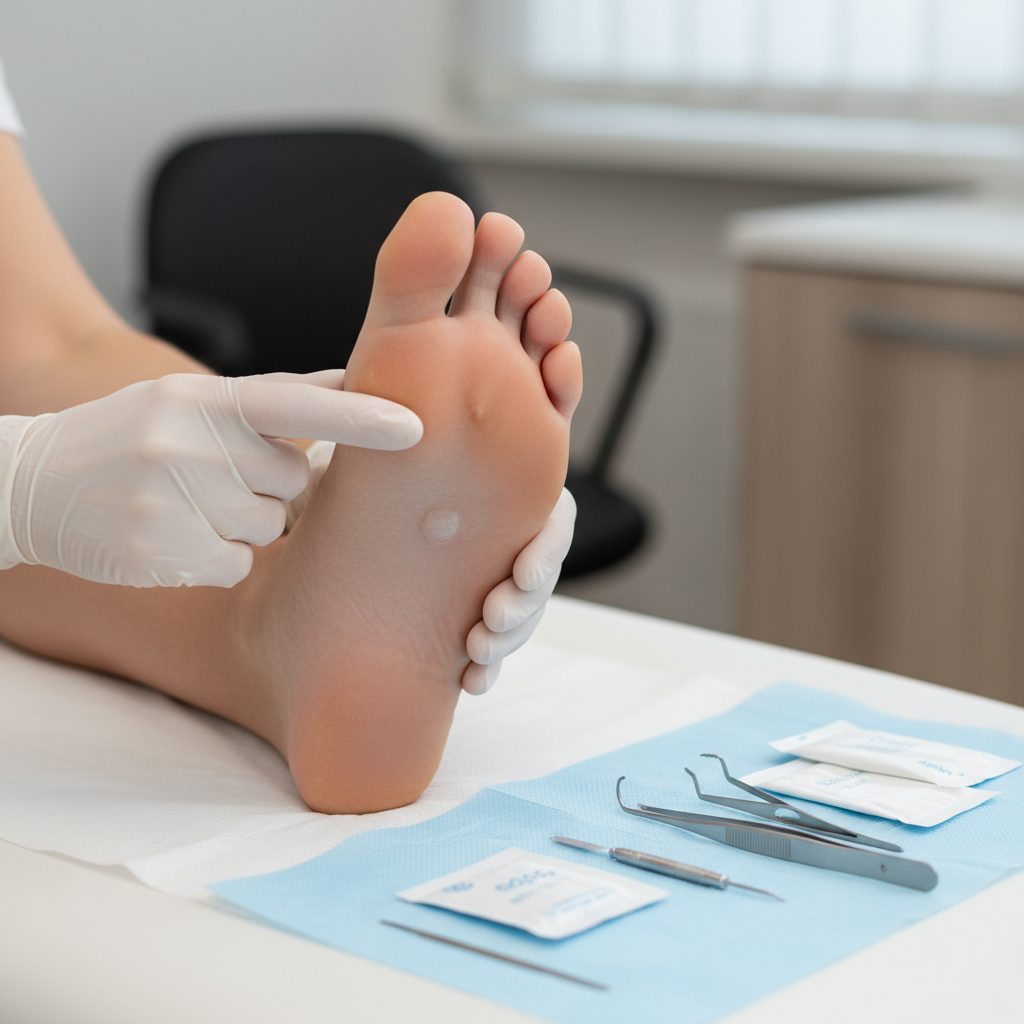
Is It Safe to Pop a Blister on Your Foot? A Podiatrist’s Guide to Blister Care
Discover whether popping a foot blister is safe, how to identify signs of infection, and the best ways to treat friction blisters at home while protecting your skin's natural healing barrier.
That stinging, fluid-filled bubble on your heel or toe can turn a simple walk into a painful ordeal, tempting you to reach for a needle just to relieve the pressure. While the urge to pop a blister is strong, doing so prematurely can strip away your body's best defense against infection and significantly delay your recovery.
What's actually happening
A friction blister is essentially a biological bandage. When your skin is subjected to repetitive rubbing or shear forces, the upper layer (the epidermis) separates from the layer beneath it (the dermis). The body responds by filling this gap with serum, a clear fluid that cushions the sensitive tissue underneath and provides a sterile environment for new skin to grow. According to the American Academy of Dermatology, this fluid acts as a protective barrier, and the overlying skin—the "roof" of the blister—prevents bacteria from entering the wound.
Signs and symptoms to watch for
Most blisters are straightforward, but they can quickly become complicated if the skin barrier is breached. Watch for these common indicators:
- A raised, translucent bubble filled with clear fluid.
- Tenderness or localized pain when pressure is applied.
- Redness around the edges of the bubble.
- A "hot" sensation in the specific area of friction.
Key Takeaway: The skin covering a blister is your body's most effective sterile dressing; keeping it intact is the fastest way to heal without complications.
Causes and risk factors
Blisters don't just happen by accident; they are the result of mechanical stress. The most common culprits include:
- Ill-fitting footwear: Shoes that are too tight or too loose allow the foot to slide, creating friction.
- Moisture: Sweaty feet soften the skin, making it more susceptible to tearing and separation.
- Activity changes: Suddenly increasing your walking or running mileage before your skin has time to toughen (callus) often leads to blistering.
- Foot deformities: Bunions or hammertoes create prominent bony areas that rub against the insides of shoes.
How it's diagnosed
In a clinical setting, a podiatrist diagnoses a blister through a simple physical examination. We look at the location, the color of the fluid, and the integrity of the skin. If the area appears unusually red, warm, or is draining cloudy fluid, we may perform a skin culture to check for bacterial infections like Staphylococcus aureus. For patients with underlying conditions like diabetes, we also assess peripheral circulation and nerve sensation to ensure the blister isn't the start of a more serious ulcer.
Treatment options
Conservative care
The gold standard for blister care is to leave it alone. Cover the area with a loose bandage or a specialized "moleskin" pad cut into a donut shape to shift pressure away from the bubble. If the blister is small and intact, your body will reabsorb the fluid within a few days. Avoid using harsh chemicals like alcohol or hydrogen peroxide directly on an open blister, as these can damage healing tissue.
Advanced/minimally invasive options
If a blister is extremely large, painful, or located in a spot where it will inevitably rupture (like the bottom of the foot), a podiatrist may perform a controlled drainage. Using a sterile surgical needle, we create a small puncture at the edge of the blister to allow the fluid to escape while keeping the skin "roof" flattened against the wound. We then apply antimicrobial ointments and specialized hydrocolloid dressings that mimic the skin's natural moisture balance.
Surgical options
Surgery is rarely required for a simple friction blister. However, if blisters are chronic and caused by an underlying bone prominence—such as a severe bunion—surgical correction of the bone may be necessary to prevent recurrent skin breakdown and potential deep-tissue infection.
Recovery and what to expect
With proper care, a typical foot blister heals within 7 to 10 days. During the first 48 hours, the focus is on protection. By day three or four, the fluid usually begins to drain or be reabsorbed, and the skin underneath begins to toughen. You should avoid the activity that caused the blister until the tenderness has completely subsided. If the blister was drained, the "dead" skin on top will eventually dry up and peel off naturally; do not pick at it, as this can expose raw skin prematurely.
Prevention and self-care tips
- Moisture-wicking socks: Switch from cotton to synthetic blends or wool that pull sweat away from the skin.
- Proper shoe sizing: Ensure there is a thumb’s width of space between your longest toe and the end of the shoe.
- Lubrication: Apply anti-friction balms or petroleum jelly to known "hot spots" before long walks or runs.
- Double-layering: Wearing two pairs of thin socks can allow the friction to happen between the sock layers rather than against your skin.
When to see a podiatrist
While most blisters heal at home, certain symptoms require professional medical intervention to prevent cellulitis or systemic infection:
- The fluid inside the blister is yellow, green, or cloudy (pus).
- Red streaks are extending away from the blister site.
- The area is excessively warm to the touch or throbbing.
- You have a fever or chills accompanying the foot pain.
- You have diabetes or poor circulation; any foot wound in these cases is an emergency.