Ingrown Toenails: Prevention, Home Care, and When Surgery is Needed
Learn how to manage ingrown toenails effectively. This guide covers prevention strategies, safe at-home care techniques, and the clinical signs that indicate a need for professional podiatric intervention or minor surgical correction.
That tiny, sharp corner of your toenail can quickly turn a simple walk into an agonizing ordeal of throbbing pressure and stinging pain. While an ingrown toenail might seem like a minor cosmetic nuisance, it is a legitimate medical condition that can lead to severe infection and mobility issues if left unaddressed.
What's actually happening
An ingrown toenail, known clinically as onychocryptosis, occurs when the side or corner of a toenail grows into the soft flesh of the nail fold rather than over it. Think of it as a splinter that is still physically attached to your body; as the nail continues to grow, it acts like a slow-motion blade cutting into the sensitive skin of your toe.
The big toe is the most common victim of this condition. When the nail pierces the skin, your body treats the nail plate as a "foreign body." This triggers an inflammatory response as your immune system rushes to the site. If the skin barrier is breached, bacteria—which naturally live on the surface of your feet—can enter the deeper tissues, leading to a painful infection. In chronic cases, the body may even produce granulation tissue, which is an overgrowth of puffy, red vascular tissue that bleeds easily and attempts to heal over the offending nail edge.
Signs and symptoms to watch for
Ingrown toenails typically progress through stages, and recognizing the early warning signs can help you prevent a minor irritation from becoming a major infection.
- Tenderness and pain: You may notice discomfort specifically when pressure is applied to the toe, such as when wearing tight shoes or if someone accidentally steps on your foot.
- Swelling and redness: The skin around the nail edge often becomes firm, red, and swollen as inflammation sets in.
- Localized heat: The affected toe may feel warmer to the touch than the surrounding toes.
- Drainage or pus: If an infection is present, you may see white, yellow, or clear fluid oozing from the side of the nail.
- Overgrowth of skin: In advanced cases, the skin along the side of the nail may appear to be growing over the nail plate.
- Throb and pressure: A persistent, rhythmic throbbing sensation often indicates that the pressure inside the toe is building due to inflammation or an abscess.
Causes and risk factors
While some people are simply born with a genetic predisposition toward curved nails, many cases of ingrown toenails are caused by lifestyle factors and daily habits.
Improper Trimming Habits The single most common cause is cutting toenails too short or tapering the corners. When the nail is cut into a deep curve, it encourages the skin to fold over the nail edge. As the nail grows back, it has nowhere to go but into the skin.
Ill-Fitting Footwear Shoes that are too tight, narrow, or pointy (like high heels or certain athletic cleats) compress the toes together. This constant lateral pressure forces the nail plate into the surrounding flesh.
Trauma and Injury Stubbing your toe, dropping a heavy object on your foot, or repetitive "micro-trauma" (such as the constant hitting of the toe against the front of a shoe while running or playing soccer) can damage the nail bed and cause the nail to grow abnormally.
Genetic Predisposition Some individuals inherit nails that are naturally wider than the nail bed or possess a "pincer nail" shape, where the nail curls inward like a staple.
Health Conditions Poor circulation, diabetes, or fungal infections (onychomycosis) can change the texture and growth pattern of the nail, making it more brittle and prone to ingrowing.
Key takeaway: Most ingrown toenails are preventable by changing the way you trim your nails and ensuring your footwear provides ample "wiggle room" for your toes.
How it's diagnosed
Diagnosing an ingrown toenail is generally straightforward and involves a physical examination by a podiatrist. Dr. Eskander will typically examine the toe for signs of redness, swelling, and the presence of any "spicules" (sharp nail fragments) embedded in the skin.
During the exam, your provider will also assess your neurovascular status—checking your pulses and sensation—to ensure that your peripheral circulation is adequate for healing. If the infection appears deep or if there is a history of trauma, an X-ray may be ordered to rule out a bone infection (osteomyelitis) or a subungual exostosis (a small bone spur under the nail).
Treatment options
The goal of treatment is to alleviate pain, clear any underlying infection, and prevent the nail from ingrowing again in the future.
Conservative care
If the condition is caught early and there is no sign of severe infection (like pus or radiating redness), you may be able to manage the symptoms at home.
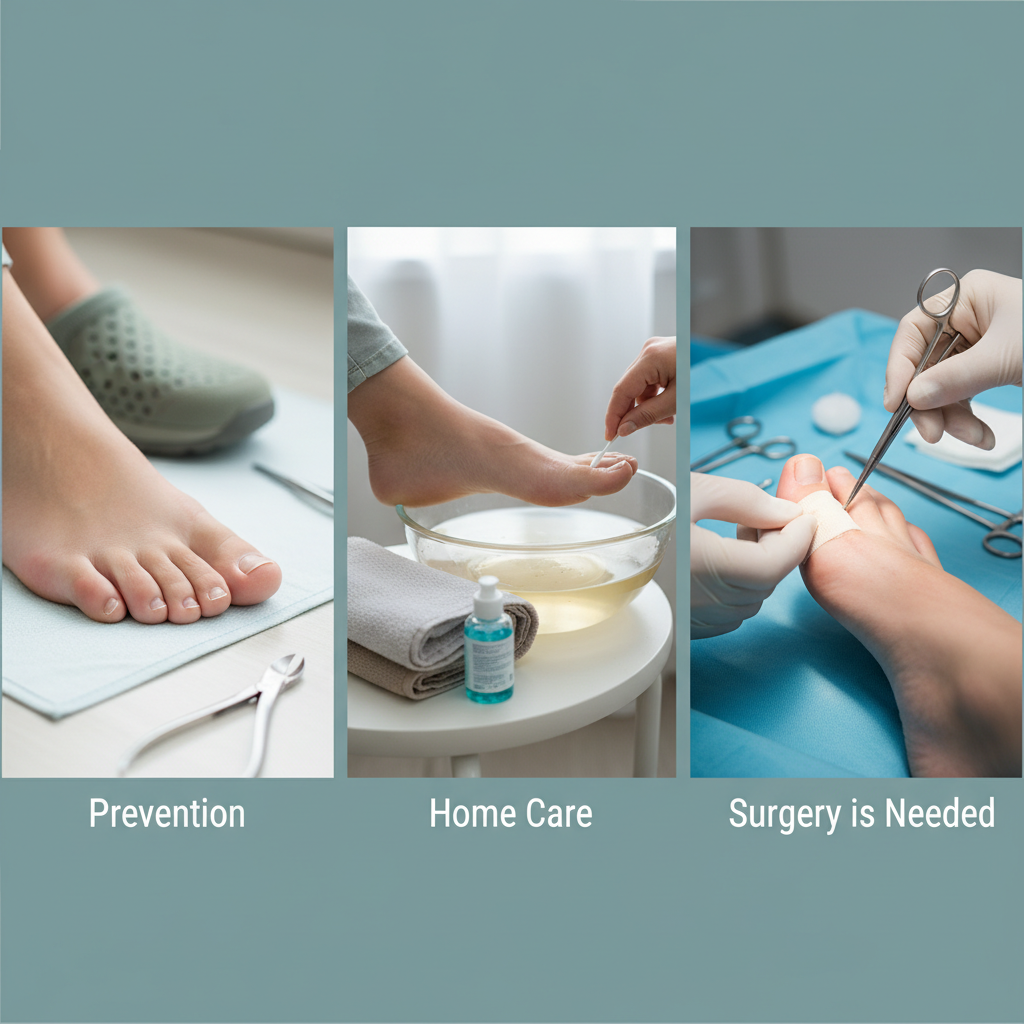
- Warm Soaks: Soak your foot in warm water mixed with Epsom salts for 15–20 minutes, three times a day. This softens the skin and nail.
- Antibiotic Ointment: Applying an over-the-counter antibiotic cream and a clean bandage can help protect the area.
- Proper Footwear: Switch to open-toed sandals or wide-toe shoes during the healing process to eliminate pressure.
- Avoid "Bathroom Surgery": Never attempt to cut the nail out yourself with unsterile tools. This almost always leads to a deeper infection and more significant pain.
Advanced or minimally invasive options
If home care does not provide relief within a few days, professional intervention is necessary.
- Lifting the nail: For mildly ingrown nails, a podiatrist may place a small piece of sterile cotton or a specialized splint under the edge of the nail. This lifts the nail upward, acting as a track to help it grow above the skin edge.
- Medicated Soaks and Topicals: Prescription-strength topical agents may be used to reduce the size of hyper-granulation tissue.
Surgical options
For chronic, recurring, or severely infected ingrown nails, a minor in-office procedure is often the most effective permanent solution.
- Partial Nail Avulsion: Under a local anesthetic (to numb the toe completely), the doctor removes the narrow vertical strip of nail that is digging into the skin.
- Matrixectomy (Permanent Removal): To prevent the nail from ever growing back into that spot, a chemical called phenol or a laser is applied to the "root" (the matrix) of the nail. This cauterizes the growth cells in that specific corner, ensuring the nail remains slightly narrower and permanently clears the skin fold.
- Total Nail Avulsion: In rare cases where the nail is severely deformed or fungal, the entire nail plate may be removed to allow a healthy nail to regenerate or to address underlying nail bed issues.
Recovery and what to expect
Recovery from a professional ingrown toenail procedure is usually rapid, and most patients experience an immediate reduction in the "sharp" pain they felt prior to the appointment.
- Directly After Procedure: Your toe will be numb for several hours. You will leave the office with a bulky "pressure dressing" to prevent bleeding. It is recommended to wear a surgical shoe or very loose sandal home.
- The First 24 Hours: You will typically be instructed to keep the bandage dry and elevate your foot. Most patients can manage any post-procedural discomfort with basic over-the-counter pain relievers.
- Days 2–7: You will begin daily soaking in warm Epsom salt water, followed by applying a small amount of antibiotic ointment and a simple adhesive bandage.
- Weeks 2–4: The site will form a small scab or appear slightly pink. This is the "drainage phase" where the chemical used for the matrixectomy heals. You can usually return to normal exercise and tight-fitting athletic shoes within 1 to 2 weeks, depending on your doctor's advice.
- Long-term: If a matrixectomy was performed, that corner of the nail will stay gone permanently. The rest of the nail will continue to grow normally.
Prevention and self-care tips
Preventing a recurrence involves a combination of mechanical changes and skin care.
- Trim straight across: Do not follow the curve of your toe. Use a heavy-duty toenail clipper and keep the nail level with the tips of your toes.
- Don't cut too short: Trimming nails into the "quick" allows the skin to fold over the nail edge.
- Check your shoes: Ensure there is at least a half-inch of space between your longest toe and the front of the shoe. Avoid shoes with narrow toe boxes.
- Protect your feet: If you work in an environment where you might drop heavy objects (like construction or landscaping), wear steel-toed boots.
- Manage moisture: Excessively sweaty feet can soften the skin, making it easier for a sharp nail to pierce it. Use moisture-wicking socks.
When to see a podiatrist
Self-care has its limits. If you have a comorbid condition or if the toe shows signs of significant infection, professional care is mandatory.
- You have Diabetes: Any foot injury, no matter how small, can lead to serious complications for those with diabetes or peripheral neuropathy.
- Signs of spreading infection: Red streaks moving up the foot from the toe, fever, or chills.
- Severe pain: If the pain prevents you from sleeping or walking.
- Recurrence: If you have had more than two ingrown toenails on the same toe in a single year.
- Presence of a "granuloma": If you see a growth of raw, red, bleeding skin over the nail.