
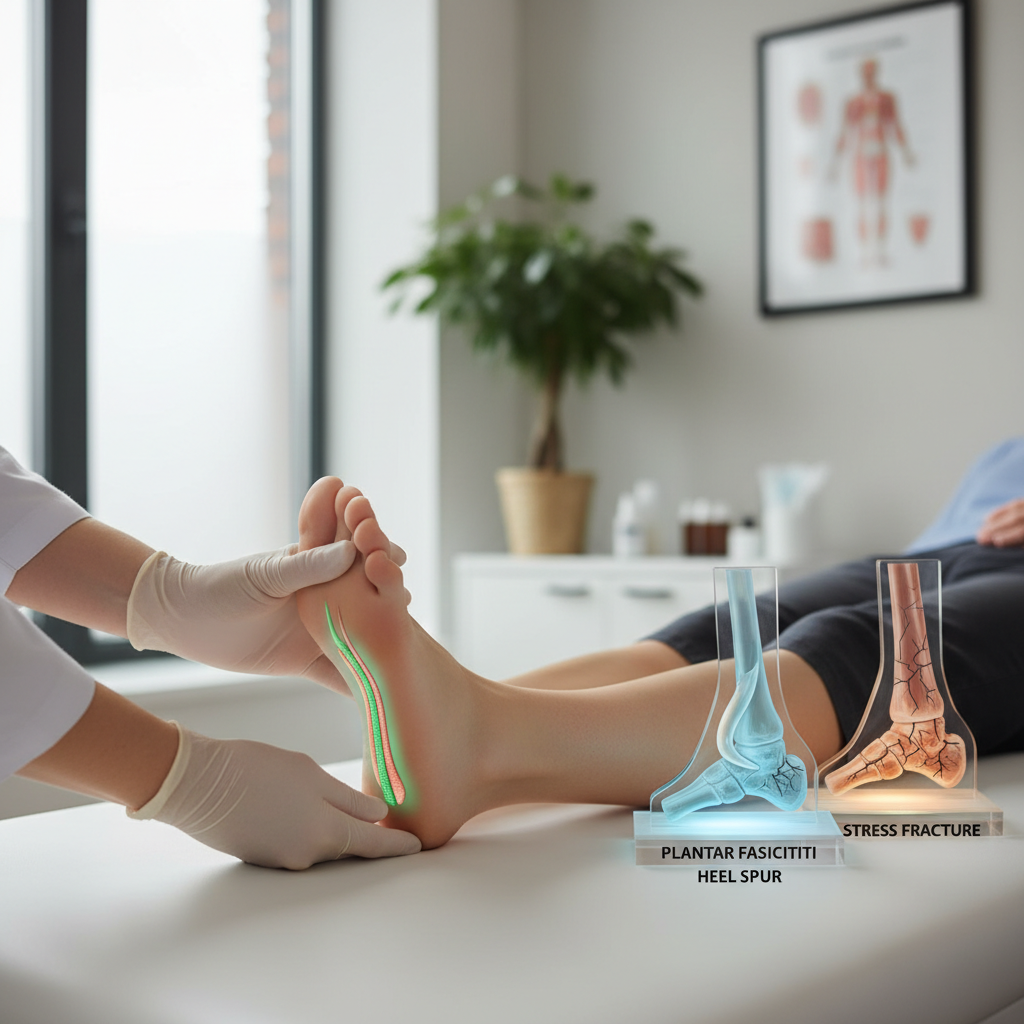
Heel Pain Decoded: Differentiating Plantar Fasciitis, Spurs, and Stress Fractures
Not all heel pain is created equal. Learn how to distinguish between common conditions like plantar fasciitis and more serious issues like calcaneal stress fractures to find the right path to recovery.
That first sharp, stabbing step out of bed in the morning can feel like walking on a thumb tack, signaling that something is fundamentally wrong with your heel's foundation. While many people assume any heel discomfort is simply 'soreness,' the difference between a strained ligament and a cracked bone determines whether you need a simple stretch or a walking boot.
What's actually happening
Your heel bone, or calcaneus, is the largest bone in your foot and serves as the primary shock absorber for every step you take. When you experience heel pain, the culprit is usually a breakdown in the relationship between this bone and the soft tissues attached to it.
In plantar fasciitis, the thick band of tissue (fascia) that connects your heel to your toes becomes inflamed or develops microscopic tears. A heel spur is a calcium deposit that forms on the underside of the heel bone, often as a secondary response to long-term fascia strain. Conversely, a stress fracture is a structural failure—a tiny crack in the bone itself caused by repetitive force that exceeds the bone's ability to remodel.
Signs and symptoms to watch for
Identifying the specific 'flavor' of your pain can help narrow down the cause:
- Plantar Fasciitis: Intense 'first-step' pain in the morning that dulls into a dull ache but returns after long periods of sitting or standing.
- Heel Spurs: Often asymptomatic on their own, but when they cause trouble, they feel like a sharp pinprick localized to the bottom-front of the heel.
- Stress Fractures: Pain that worsens during activity rather than improving with movement, often accompanied by swelling and tenderness when squeezing the sides of the heel bone.
- Nerve Entrapment: Burning or tingling sensations that may radiate toward the arch or ankle.
Causes and risk factors
Heel pain rarely appears without a catalyst. Common contributors include:
- Biomechanical Issues: Having very high arches or flat feet (overpronation) puts uneven tension on the plantar fascia.
- Sudden Activity Spikes: Rapidly increasing running mileage or switching to high-intensity interval training without proper conditioning.
- Occupational Hazards: Jobs that require standing on hard surfaces like concrete for eight or more hours a day.
- Improper Footwear: Wearing worn-out sneakers or flat sandals that offer zero longitudinal arch support.
Key Takeaway: Plantar fasciitis typically feels worst after rest, while a stress fracture feels worst during active impact. Distinguishing between these two is vital for preventing long-term bone damage.
How it's diagnosed
A professional diagnosis begins with a physical exam to locate the exact point of maximum tenderness. We often use weight-bearing X-rays to identify heel spurs or significant bone changes. However, because stress fractures may not appear on a standard X-ray for several weeks, advanced imaging like an MRI or Diagnostic Ultrasound may be used to visualize soft tissue inflammation or early-stage bone edema.
Treatment options
Conservative care
Most heel pain resolves with non-invasive measures. This includes the RICE protocol (Rest, Ice, Compression, Elevation), custom orthotics to correct gait imbalances, and specific calf-stretching exercises. Night splints may also be used to keep the fascia elongated while you sleep, preventing that morning 'snap' of the tissue.
Advanced/minimally invasive options
If initial treatments fail, we may look toward Extracorporeal Shockwave Therapy (ESWT), which uses sound waves to stimulate healing in chronic tissue. Corticosteroid injections can provide rapid inflammation relief, though they are used sparingly to avoid weakening the fat pad of the heel.
Surgical options
Surgery is a last resort, reserved for cases that do not respond after 6–12 months of conservative care. Procedures may include a plantar fascia release, where a portion of the ligament is cut to relieve tension, or the removal of a large, problematic bone spur.
Recovery and what to expect
Recovery is a marathon, not a sprint. For plantar fasciitis, most patients see significant improvement within 4 to 8 weeks of consistent stretching and orthotic use. Stress fractures require a stricter timeline, often involving 6 to 12 weeks of protected weight-bearing in a cam walker (boot) to allow the bone to knit back together. Rushing back to impact sports too early is the leading cause of chronic recurrence.
Prevention and self-care tips
- Replace shoes regularly: Athletic shoes lose their structural integrity every 300–500 miles.
- Stretch your calves: Tight Achilles tendons are a primary driver of heel tension.
- Avoid barefoot walking: Especially on hardwood or tile floors, use supportive indoor footwear to cushion the calcaneus.
- Gradual progression: Follow the '10% rule'—never increase your exercise intensity or duration by more than 10% per week.
When to see a podiatrist
While minor aches might fade with rest, you should seek professional evaluation if you experience:
- Pain that persists for more than two weeks despite home treatment.
- Inability to bear weight on the heel or a noticeable change in your walking gait.
- Swelling or discoloration around the back of the foot.
- Numbness or a 'pins and needles' sensation in the heel.
- Pain that wakes you up in the middle of the night.