
Healing an Ingrown Toenail: Home Care Strategies and When to Seek Help
Discover the safest ways to manage ingrown toenail pain at home, understand why they happen, and learn the critical signs that indicate you need professional podiatric care to prevent infection.
That sharp, throbbing pressure at the corner of your toe can make every step feel like you are walking on a needle. While it is tempting to reach for the bathroom tweezers, the fastest way to heal an ingrown toenail safely involves gentle care rather than aggressive 'bathroom surgery.'
What's actually happening
An ingrown toenail, clinically known as onychocryptosis, occurs when the side or corner of the nail plate grows into the soft flesh of the nail fold. According to the Mayo Clinic, this most commonly affects the hallux, or big toe. The nail acts like a foreign object, piercing the skin and triggering an inflammatory response. The body sends white blood cells to the area, resulting in the characteristic redness, swelling, and warmth associated with the condition.
Signs and symptoms to watch for
Identifying an ingrown toenail early can prevent a minor irritation from becoming a severe infection. Look for these common indicators:
- Tenderness or sharp pain when pressure is applied to the toe.
- Redness and swelling around the edge of the nail.
- Fluid buildup or a small amount of clear drainage.
- Overgrowth of skin (hypertrophy) around the corner of the nail.
- Warmth radiating from the affected area.
Causes and risk factors
Several factors can influence how your nails grow and whether they are prone to becoming ingrown. Common culprits include:
- Improper Trimming: Cutting nails too short or rounding the corners encourages the skin to fold over the nail edge.
- Ill-fitting Footwear: Shoes that are too tight in the toe box compress the toes together, forcing the nail into the skin.
- Trauma: Stubbing your toe or having a heavy object fall on it can alter nail growth.
- Genetics: Some individuals naturally have highly curved or 'pincer' nails that are more likely to become ingrown.
- Activity Levels: Athletes, particularly runners and soccer players, face increased repetitive pressure on their toes.
How it's diagnosed
A podiatrist can typically diagnose an ingrown toenail through a physical examination. During the visit, the nail will be assessed for signs of infection, such as pus or excessive tissue growth called granulation tissue. In rare cases where the infection appears deep or chronic, an X-ray may be ordered to ensure the infection hasn't reached the underlying bone (osteomyelitis).
Treatment options
Conservative care
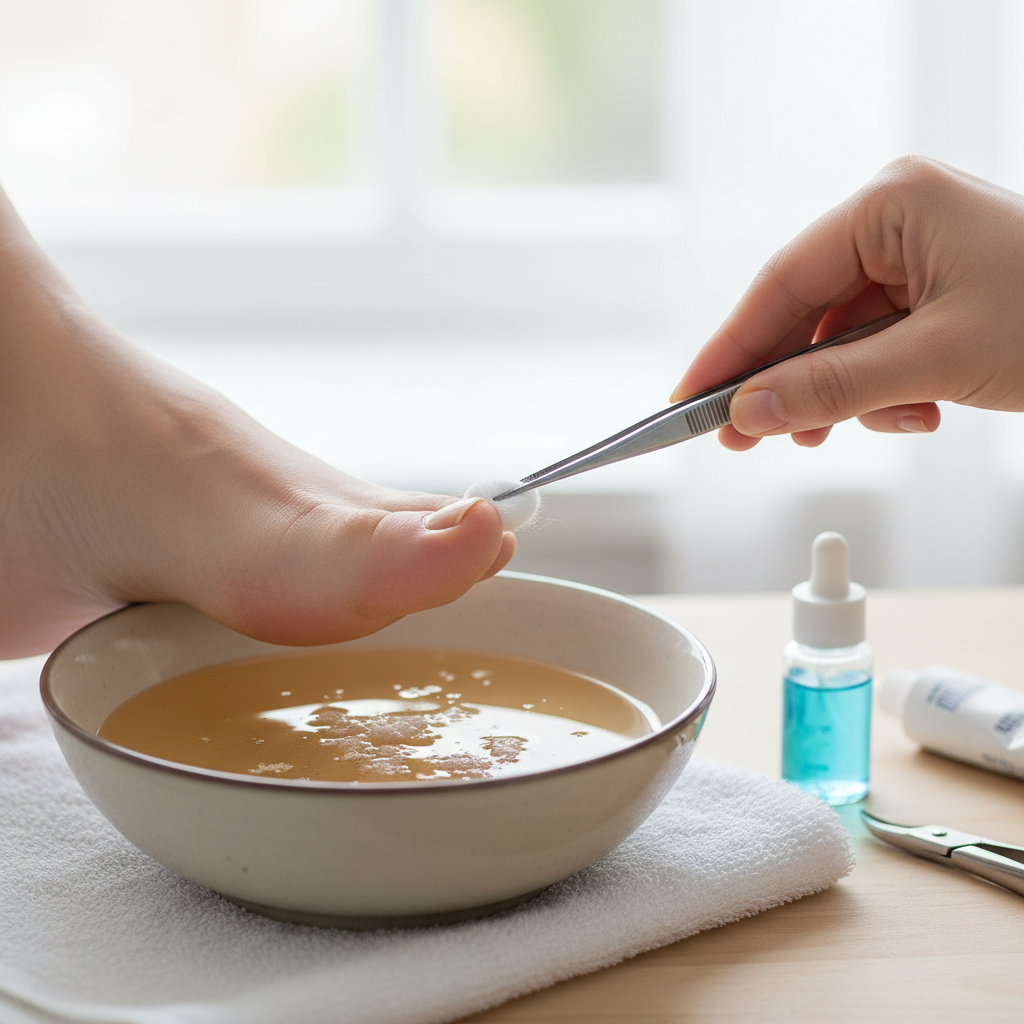
The fastest way to soothe an ingrown nail at home is through warm salt water soaks. Submerge the foot for 15 to 20 minutes, three times a day. This softens the skin and helps reduce inflammation. After soaking, apply an antibiotic ointment and a clean bandage. It is vital to avoid the 'bathroom surgery' trap; never attempt to cut the nail out yourself, as this significantly increases the risk of a deep bacterial infection.
Advanced/minimally invasive options
If home care doesn't provide relief within 48 hours, a podiatrist can perform a partial nail avulsion. This is a quick, in-office procedure where the offending edge of the nail is gently removed under a local anesthetic. This provides almost immediate relief from the pressure and pain.
Surgical options
For patients with chronic, recurring ingrown nails, a permanent solution called a matrixectomy may be recommended. During this procedure, the podiatrist removes the ingrown section and applies a chemical (usually phenol) to the nail root to prevent that specific portion of the nail from ever growing back.
Key Takeaway: The goal of home treatment is to reduce inflammation and keep the area sterile; if the nail has already pierced the skin, professional removal is the only way to resolve the underlying mechanical issue.
Recovery and what to expect
If treated conservatively at home, mild symptoms may resolve in 3 to 5 days. However, if a professional procedure is performed, the recovery is still remarkably fast. Most patients can return to normal shoes and light activity within 24 hours. The small gap where the nail was removed typically heals completely within 2 to 4 weeks. During this time, keeping the site clean and dry is the priority.
Prevention and self-care tips
- Trim straight across: Use toenail clippers to cut straight across the nail rather than following the curve of the toe.
- Check your fit: Ensure there is a thumb’s width of space between your longest toe and the end of your shoe.
- Maintain hygiene: Keep feet clean and dry to prevent fungal infections that can thicken the nail.
- Protect your feet: Wear steel-toed boots if your job involves heavy lifting or hazards.
When to see a podiatrist
You should seek professional medical attention immediately if you notice any of the following 'red flags':
- Pus or drainage leaking from the side of the nail.
- Red streaks extending from the toe up the foot (a sign of spreading infection).
- Severe throbbing that prevents sleep or walking.
- Fever or chills accompanying the toe pain.
- Pre-existing conditions like diabetes or poor circulation, which make any foot injury high-risk.