
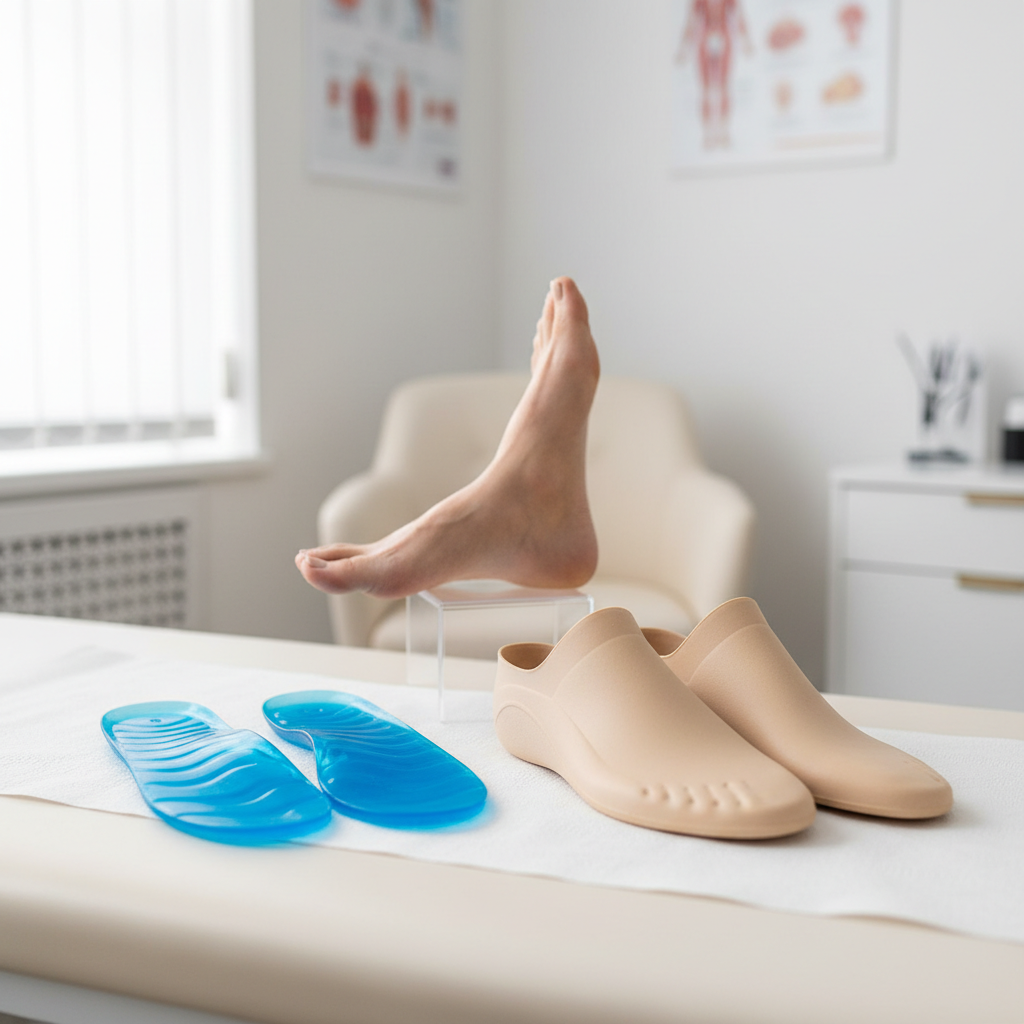
Gel Inserts vs. Custom Orthotics: Which Solution Actually Supports Your Feet?
Discover the critical differences between over-the-counter gel inserts and medical-grade custom orthotics. Learn how personalized biomechanical support outperforms generic cushioning for long-term foot health and pain relief.
That squishy, cooling sensation of a new gel insert might feel like walking on clouds for the first few minutes, but for many, the relief quickly fades into familiar aches. While these mass-produced cushions promise comfort, they often mask symptoms rather than addressing the structural imbalances causing your pain.
What's actually happening
To understand the difference between these two options, we have to look at the mechanics of the foot. A gel insert is primarily a shock absorber; it is designed to provide a layer of padding between your heel and the ground. It compresses under your weight, offering temporary comfort by reducing the immediate impact of each step.
In contrast, a custom orthotic is a highly engineered medical device. Instead of just adding 'squish,' it realigns the structures of the foot and ankle. By controlling the way your joints move—specifically the subtalar joint—orthotics ensure that your weight is distributed evenly across the entire foot. This prevents the overstretching of tendons and the collapse of arches that lead to chronic conditions.
Key Takeaway: Gel inserts are like a soft pillow for your feet, while custom orthotics are like a corrective brace that fixes your alignment and prevents long-term damage.
Signs and symptoms to watch for
If you are currently using store-bought inserts and still experiencing issues, your feet may be signaling a need for more rigid support. Watch for these indicators:
- Persistent pain in the heel or arch that worsens in the morning.
- Uneven wear patterns on the soles of your shoes.
- Frequent ankle sprains or a feeling of instability.
- Lower back, hip, or knee pain that correlates with walking or standing.
- Swelling at the base of the toes or along the inner ankle.
Causes and risk factors
Generic inserts are designed for the 'average' foot, but very few people actually possess an average foot structure. Several factors determine whether you need more than just a gel pad:
- Biomechanical Abnormalities: Conditions like overpronation (flat feet) or supination (high arches) require specific structural corrections that gel cannot provide.
- Activity Levels: High-impact athletes put significantly more force on their joints, necessitating the durable control of a custom device.
- Occupation: Those who spend 8+ hours on hard surfaces like concrete often find that gel inserts bottom out and lose effectiveness within weeks.
- Existing Conditions: Diabetes or severe arthritis requires precise pressure offloading to prevent ulcers or joint degradation.
How it's diagnosed
Determining the right path involves more than just stepping on a pressure mat at a pharmacy. A professional diagnosis involves a comprehensive gait analysis. This process looks at how your foot strikes the ground, how your arch collapses, and how your knees and hips rotate in response. We utilize physical exams and sometimes digital 3D scanning to create a precise map of your foot's unique contours, ensuring the final device accounts for every nuance of your anatomy.
Treatment options
Conservative care
For minor, temporary fatigue from a weekend of heavy walking, over-the-counter (OTC) gel inserts may be sufficient. These are best used in healthy feet with no structural issues. Physical therapy and stretching the Achilles tendon are often paired with these inserts to manage mild discomfort.
Advanced/minimally invasive options
When OTC options fail, medical-grade 'semi-custom' inserts may be used. These are sturdier than gel but less specific than full customs. However, for most patients with chronic pain, moving directly to a custom-molded solution is the most effective way to halt the progression of foot deformities.
Surgical options
Surgery is typically a last resort. However, if structural issues like a severe bunion or a collapsed posterior tibial tendon are not managed early with orthotics, surgical intervention may eventually be required to realign the bones and repair damaged soft tissue. Proper orthotic use can often delay or even eliminate the need for these procedures.
Recovery and what to expect
Unlike gel inserts, which feel 'ready' immediately, custom orthotics require a break-in period. Because they are changing the way your muscles and tendons function, you may feel slight pressure in new areas for the first week.
- Days 1-3: Wear the orthotics for only 1 to 2 hours.
- Days 4-7: Increase wear time by 2 hours each day.
- Week 2: Most patients can wear them full-time and notice a significant reduction in primary pain symptoms.
Custom orthotics typically last 2 to 5 years, whereas gel inserts often need replacement every 3 to 6 months as the material degrades.
Prevention and self-care tips
- Rotate your footwear: Avoid wearing the same pair of shoes two days in a row to allow the materials to decompress.
- Check for 'bottoming out': If you use gel, press your thumb into the heel; if you can feel the floor, the insert is spent.
- Strengthen your intrinsic muscles: Perform 'towel curls' with your toes to maintain arch strength.
- Match the shoe to the activity: Never use a lifestyle gel insert in a high-impact running shoe.
When to see a podiatrist
- You have pain that persists for more than two weeks despite using store-bought inserts.
- You have diabetes and notice any redness or calluses forming from your current inserts.
- Your inserts cause new pain in your shins, knees, or lower back.
- You have a visible foot deformity that is becoming more pronounced over time.
- You find yourself 'walking on the sides' of your shoes to find comfort.