Fast Relief for Ingrown Toenails: Safe Home Care and Professional Solutions
Discover how to safely manage an ingrown toenail at home, understand the risks of 'bathroom surgery,' and learn when professional intervention from a podiatrist is necessary for permanent relief.
That sharp, throbbing pressure at the corner of your toe isn't just a nuisance; it is a sign that your nail is literally carving a path into your sensitive skin. While it may be tempting to reach for the tweezers, the fastest way to heal an ingrown toenail involves reducing inflammation and preventing infection rather than aggressive self-surgery.
What's actually happening
An ingrown toenail, medically known as onychocryptosis, occurs when the side or corner of the nail plate grows into the soft flesh of the nail fold. This isn't just a surface-level issue; the nail acts like a foreign object, triggering an inflammatory response from your immune system. According to the American College of Foot and Ankle Surgeons (ACFAS), the surrounding skin often reacts by forming 'granulation tissue,' which is an overgrowth of vascularized skin attempting to protect the area but often resulting in more pain and easier bleeding.
Signs and symptoms to watch for
Identifying the stage of your ingrown nail helps determine if home care is still a safe option. Watch for these common indicators:
- Tenderness and pain along one or both sides of the nail.
- Localized swelling and redness (erythema) around the nail border.
- Warmth in the toe, suggesting increased blood flow to the site of injury.
- Drainage, which may be clear, yellow, or bloody, indicating the body is fighting a potential infection.
Causes and risk factors
Ingrown toenails rarely happen by accident. They are often the result of specific habits or anatomical predispositions:
- Improper Trimming: Cutting nails too short or rounding the corners allows the skin to fold over the nail edge.
- Ill-fitting Footwear: Shoes with a narrow toe box compress the toes together, forcing the nail into the skin.
- Trauma: Stubbing your toe or having a heavy object fall on it can alter the way the nail grows.
- Genetics: Some individuals are born with 'pincer nails' or naturally curved nails that are prone to ingrowing.
How it's diagnosed
A podiatrist can typically diagnose an ingrown toenail through a physical examination. During your visit, the clinical team will assess the degree of penetration and check for signs of paronychia (a skin infection around the nail). In some cases, if the infection appears deep or chronic, an X-ray may be taken to ensure the infection hasn't reached the underlying bone, a condition known as osteomyelitis.
Treatment options
Conservative care
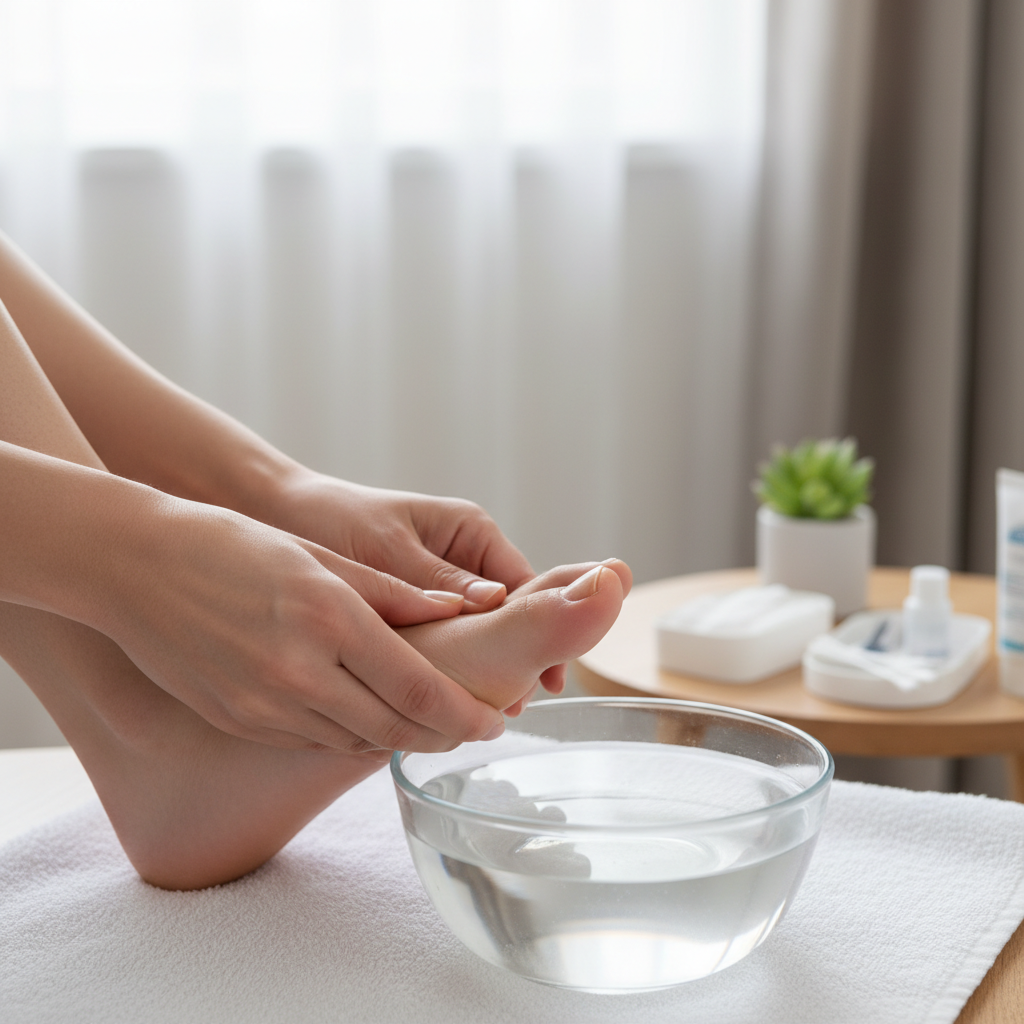
If caught early, the fastest way to soothe the pain at home is the soak-and-soften method. Soak your foot in warm water mixed with Epsom salts for 15 minutes, three times a day. This reduces swelling and softens the nail. After soaking, gently massage the skin fold away from the nail edge. Avoid 'bathroom surgery'—cutting a 'V' in the nail or digging at the corner with unsterile tools—as this significantly increases the risk of a severe bacterial infection.
Advanced/minimally invasive options
When home care fails, a podiatrist can perform a partial nail avulsion. This involves numbing the toe with a local anesthetic and removing only the narrow sliver of nail that is piercing the skin. This provides near-instant relief from the pressure and allows the wound to heal without the nail constantly re-irritating it.
Surgical options
For chronic sufferers, a permanent solution called a matrixectomy is recommended. After removing the offending nail border, the doctor applies a chemical (usually phenol) to the nail root. This prevents that specific edge of the nail from ever growing back, solving the problem permanently with minimal change to the aesthetic appearance of the toe.
Key Takeaway: The goal of home care is to reduce inflammation, but if you see pus or red streaks, home remedies are no longer safe; professional intervention is required to prevent the spread of infection.
Recovery and what to expect
If you opt for professional treatment, the recovery is surprisingly quick. Most patients experience a significant reduction in pain immediately after the procedure. You will typically wear a small bandage for a few days and may need to use antibiotic ointment. Full healing of the skin usually occurs within 7 to 10 days, during which you should avoid tight shoes and strenuous impact activities.
Prevention and self-care tips
- Trim straight across: Never round the corners of your toenails; keep the edges visible above the skin.
- Check your fit: Ensure there is a thumb’s width of space between your longest toe and the end of your shoe.
- Maintain foot hygiene: Keep feet clean and dry to prevent the skin from becoming overly soft and vulnerable to nail penetration.
- Protect your toes: If you work in construction or heavy labor, wear steel-toed boots to prevent traumatic nail injuries.
When to see a podiatrist
Certain symptoms indicate that the ingrown nail has progressed beyond the help of home soaking. Seek professional care if you notice:
- Pus or discharge leaking from the side of the nail.
- Red streaks extending from the toe up the foot.
- Severe throbbing that prevents sleep or walking.
- Diabetes or poor circulation: If you have these conditions, never attempt home care for an ingrown nail, as the risk of non-healing wounds and ulcers is extremely high.