
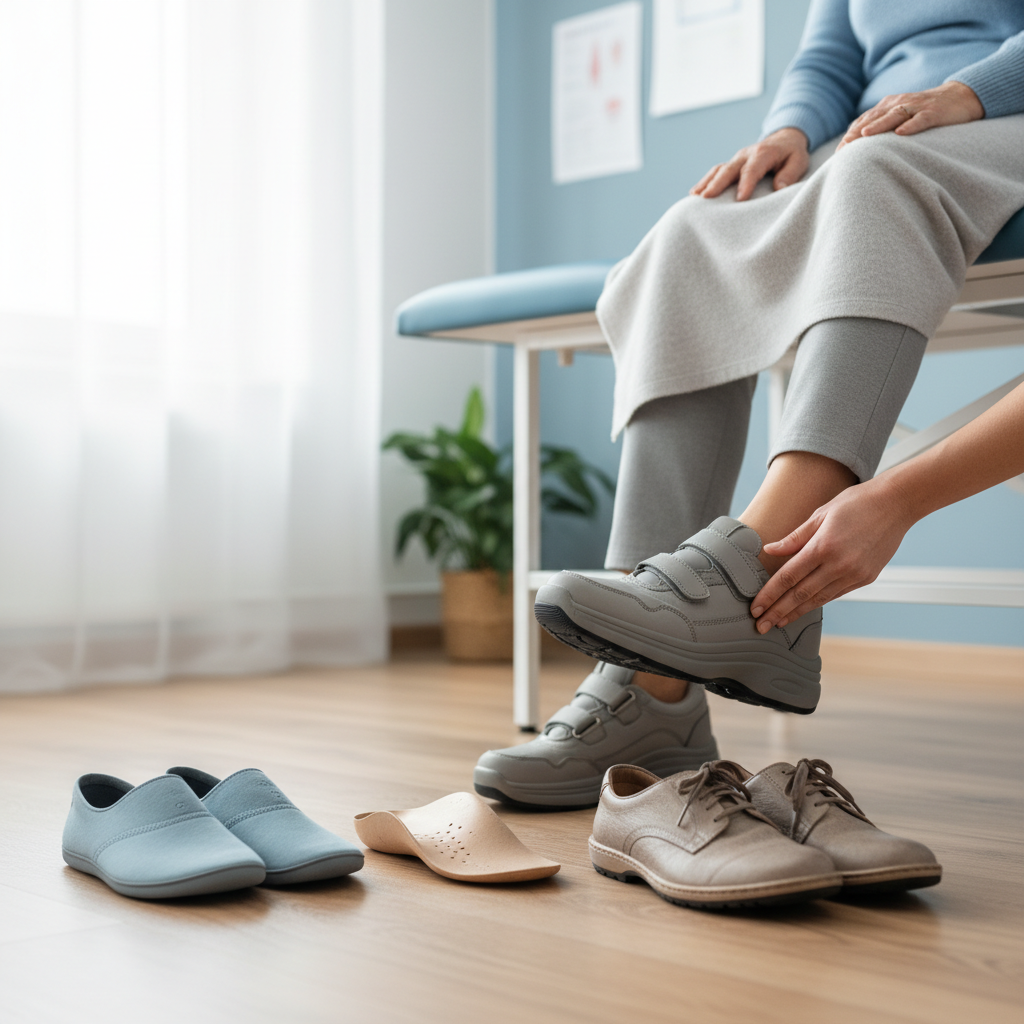
Diabetes and Footwear: A Guide to Choosing the Right Shoes for Protection
For those living with diabetes, the right pair of shoes is more than a fashion choice—it is a critical medical tool for preventing ulcers and infections. Learn how to select footwear that protects your feet and maintains your mobility.
A single poorly fitted shoe or a hidden pebble can lead to a life-altering complication when you are living with diabetes. Because this condition affects both circulation and nerve sensitivity, your footwear acts as the primary line of defense against wounds that your body may struggle to heal.
What's actually happening
Diabetes affects the feet primarily through two mechanisms: peripheral neuropathy and peripheral artery disease (PAD). According to the National Institute of Diabetes and Digestive and Kidney Diseases (NIDDK), high blood sugar levels over time damage the small nerves in the extremities. This means you might not feel a blister, a hot spot, or even a small puncture wound.
Simultaneously, diabetes can narrow the blood vessels, reducing the flow of oxygen-rich blood to the feet. Without adequate blood flow, the skin becomes thinner and more fragile, and the body’s natural inflammatory response is delayed. A minor irritation that a non-diabetic person would feel and address immediately can quickly evolve into a deep diabetic foot ulcer because the warning signs are silenced and the healing resources are restricted.
Signs and symptoms to watch for
When evaluating your current footwear and foot health, look for these indicators that your shoes may be causing harm:
- Redness or localized warmth on the skin after removing shoes.
- Blisters, calluses, or corns in areas of high pressure.
- Swelling or drainage that leaves marks on your socks.
- Changes in the shape of the foot, such as toes curling or the arch flattening.
- New tingling, numbness, or a 'burning' sensation.
Causes and risk factors
Several factors increase the risk of footwear-related injuries in diabetic patients. Poorly fitted shoes are the leading cause of friction-based ulcers. Shoes that are too tight compress the toes, while shoes that are too loose allow the foot to slide, creating shear forces against the skin.
Other risk factors include:
- Loss of Protective Sensation (LOPS): The inability to feel a 10-gram monofilament test, making it impossible to detect shoe fit issues.
- Foot Deformities: Conditions like bunions or hammertoes create bony prominences that rub against standard shoe interiors.
- Autonomic Neuropathy: This can lead to dry, cracked skin that is more susceptible to infection if the shoe material is not breathable.
How it's diagnosed
A podiatrist diagnoses the need for specialized footwear through a comprehensive diabetic foot exam. This includes a vascular assessment to check pulses and a neurological screening using a tuning fork or monofilament to map out areas of numbness. We also perform a gait analysis to see how your weight shifts as you walk, identifying 'hot spots' where pressure is highest. Imaging like X-rays may be used to identify underlying structural changes that require specific shoe modifications.
Treatment options
Conservative care
For many, the first step is transitioning to therapeutic shoes. These are often deeper and wider than standard retail shoes to accommodate swelling and orthotics. We also recommend moisture-wicking diabetic socks that lack restrictive elastic bands at the top, which can further impede circulation.
Advanced/minimally invasive options
If standard therapeutic shoes aren't enough, we utilize custom-molded orthotics. These inserts are created from a 3D scan or mold of your foot to redistribute pressure away from vulnerable areas. In cases of significant deformity, we may prescribe 'extra-depth' shoes that provide a protective 'cocoon' for the foot, reducing the risk of skin breakdown.
Surgical options
Surgery is typically a last resort, reserved for when foot deformities are so severe that no shoe can safely accommodate them. Procedures might include a tenotomy to release a contracted hammertoe or a bunionectomy to realign the big toe joint. The goal of these surgeries is to create a 'plantigrade' foot—one that sits flat and fits comfortably into protective footwear to prevent future ulceration.
Key Takeaway: The best shoe for a diabetic patient is one that offers a wide toe box, a firm heel counter, and a seamless interior to eliminate friction and pressure points.
Recovery and what to expect
When transitioning to new diabetic footwear, there is a mandatory 'break-in' period. You should not wear new shoes for more than 1 to 2 hours on the first day. Gradually increase wear time by an hour each day, checking your feet every time you take the shoes off. Within two weeks, your feet should be fully acclimated. If you notice any persistent redness that doesn't fade after 20 minutes of rest, the shoes require professional adjustment.
Prevention and self-care tips
- Shop late in the day: Feet tend to swell as the day progresses; buying shoes in the afternoon ensures a fit that accommodates this swelling.
- Check the 'insides': Always run your hand inside your shoes before putting them on to check for torn linings, pebbles, or rough seams.
- Avoid pointed toes: Choose shoes with a 'square' or 'round' toe box to prevent toe crowding.
- Never go barefoot: Even inside the house, wear supportive slippers or shoes to protect against accidental stubs or punctures.
- Replace shoes frequently: The cushioning in shoes breaks down over time. Most diabetic patients should replace their primary walking shoes every 6 to 9 months.
When to see a podiatrist
- You discover a blister, cut, or scratch that does not show signs of healing after 24 hours.
- There is any redness, swelling, or localized heat in the foot or ankle.
- You notice an ingrown toenail or a fungal infection.
- Your feet change shape or you develop new calluses.
- You have not had a professional foot screening in the last 12 months.