
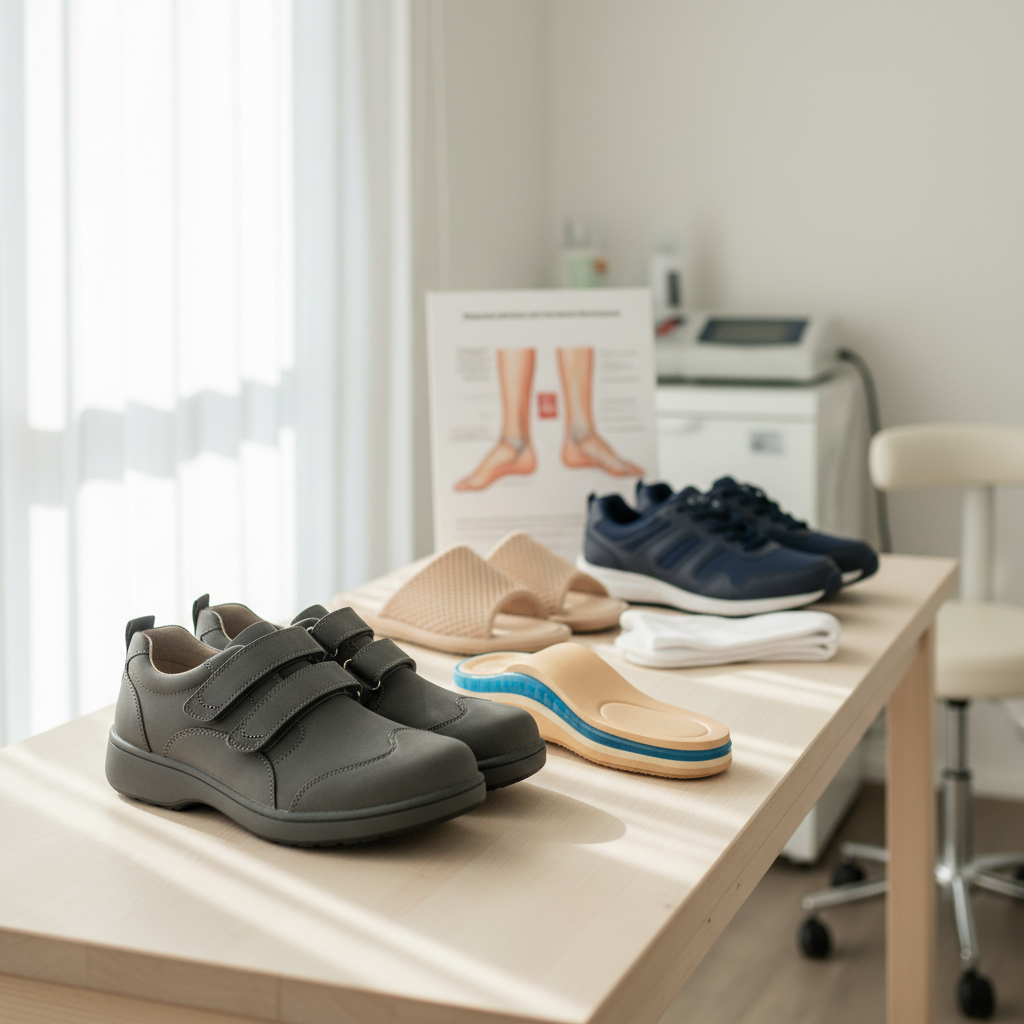
Diabetes and Footwear: A Comprehensive Guide to Protecting Your Feet with the Right Shoes
Discover how the right footwear prevents serious diabetic complications like ulcers and neuropathy. Learn what to look for in a diabetic shoe, from extra depth to seamless interiors, and how to protect your feet daily in Irvine, California.
A single poorly placed seam or a slightly narrow toe box might seem like a minor annoyance, but for someone living with diabetes, it can be the catalyst for a life-altering complication. When your feet are the foundation of your mobility, choosing the right footwear isn't just a matter of style—it is a critical component of your daily medical care.
What's actually happening
Diabetes affects the feet through two primary mechanisms: peripheral neuropathy and peripheral artery disease (PAD). Neuropathy causes nerve damage that numbs the sensations of pain, heat, or cold. This means you might not feel a blister forming or a small pebble inside your shoe. Simultaneously, PAD reduces blood flow to the extremities, which significantly slows the body's ability to heal even minor abrasions.
Without the warning signal of pain, a small rub can quickly progress into a diabetic foot ulcer. According to the American Podiatric Medical Association (APMA), these ulcers are a leading cause of hospitalizations and, if left untreated, can lead to infections that may necessitate amputation. Proper footwear acts as a protective barrier, redistributing pressure and shielding fragile skin from friction.
Signs and symptoms to watch for
Because neuropathy can mask pain, you must rely on visual inspections rather than physical sensations. Watch for these indicators that your current shoes are causing damage:
- Redness or localized "hot spots" on the toes or heels after removing shoes.
- Blisters, calluses, or corns that appear repeatedly in the same location.
- Swelling (edema) that makes your shoes feel increasingly tight as the day progresses.
- Drainage or staining on your socks, which may indicate an open sore you cannot feel.
- Changes in the shape of your foot, such as toes curling or the arch flattening.
Causes and risk factors
Several factors increase the urgency of wearing specialized diabetic footwear. High blood sugar levels over time damage the small blood vessels and nerves. If you have already developed Charcot foot—a condition where bones weaken and shift—standard shoes can actually cause fractures. Other risk factors include a history of previous ulcers, poor circulation, and foot deformities like bunions or hammertoes, which create high-pressure points against standard shoe materials.
How it's diagnosed
A podiatrist diagnoses your specific footwear needs through a comprehensive diabetic foot exam. This involves testing your sensation using a Semmes-Weinstein monofilament, checking pedal pulses to assess blood flow, and performing a gait analysis. By observing how you walk, a specialist can identify abnormal pressure patterns. In some cases, digital pressure mapping is used to see exactly where your weight is concentrated, allowing for the prescription of custom orthotics or therapeutic shoes.
Treatment options
Conservative care
For many patients, the first line of defense is transitioning to therapeutic shoes. These are not your average sneakers; they are designed with extra depth to accommodate custom inserts and have a non-binding upper to prevent pressure. Features to look for include a wide toe box, a firm heel counter for stability, and a seamless interior to prevent chafing.
Advanced/minimally invasive options
If standard therapeutic shoes aren't enough, custom-molded orthotics are the gold standard. These are crafted from a 3D model of your foot to ensure total contact, effectively offloading pressure from vulnerable areas. For those with significant swelling, adjustable closures like Velcro are preferred over laces to maintain a proper fit throughout the day.
Surgical options
Surgery is typically reserved for cases where foot deformities—like severe hammertoes or bone spurs—make it impossible to fit into any protective footwear. By surgically realigning the bone structure, a podiatrist can eliminate the source of the friction, making it possible for the patient to wear therapeutic shoes safely and prevent future ulcerations.
Key Takeaway: The best shoe for a diabetic patient is one that provides a "protective envelope," eliminating friction and redistributing weight to prevent the small injuries that lead to major complications.
Recovery and what to expect
When transitioning to new diabetic footwear, your feet need time to adjust. A typical break-in schedule looks like this:
- Days 1-2: Wear the shoes for only 1 to 2 hours inside the house, then check your feet for redness.
- Days 3-5: Increase wear time to 3 to 4 hours, continuing twice-daily foot inspections.
- Week 2: If no issues arise, you can begin wearing them for full days.
You should expect to replace your diabetic shoes every 6 to 12 months, as the cushioning materials eventually compress and lose their ability to shock-absorb.
Prevention and self-care tips
- Always wear socks: Choose moisture-wicking, seamless diabetic socks to reduce friction and keep skin dry.
- Shake out your shoes: Before putting them on, feel inside for pebbles, torn linings, or small objects.
- Shop late in the day: Feet tend to swell in the afternoon; buying shoes then ensures they won't be too tight.
- Never go barefoot: Even inside the house, wear supportive slippers or shoes to prevent accidental punctures or stubs.
- Measure every time: Foot size can change with age and health status; always have your feet measured by a professional when buying new pairs.
When to see a podiatrist
- You notice a sore, blister, or cut that does not show signs of healing within 24 hours.
- You have persistent redness or a "hot spot" that doesn't disappear after taking your shoes off.
- You experience new tingling, burning, or complete numbness in your feet.
- Your feet have changed shape, making your current shoes feel tight or uncomfortable.
- You have thick, yellowed toenails or fungal infections, which can lead to skin breakdown.