
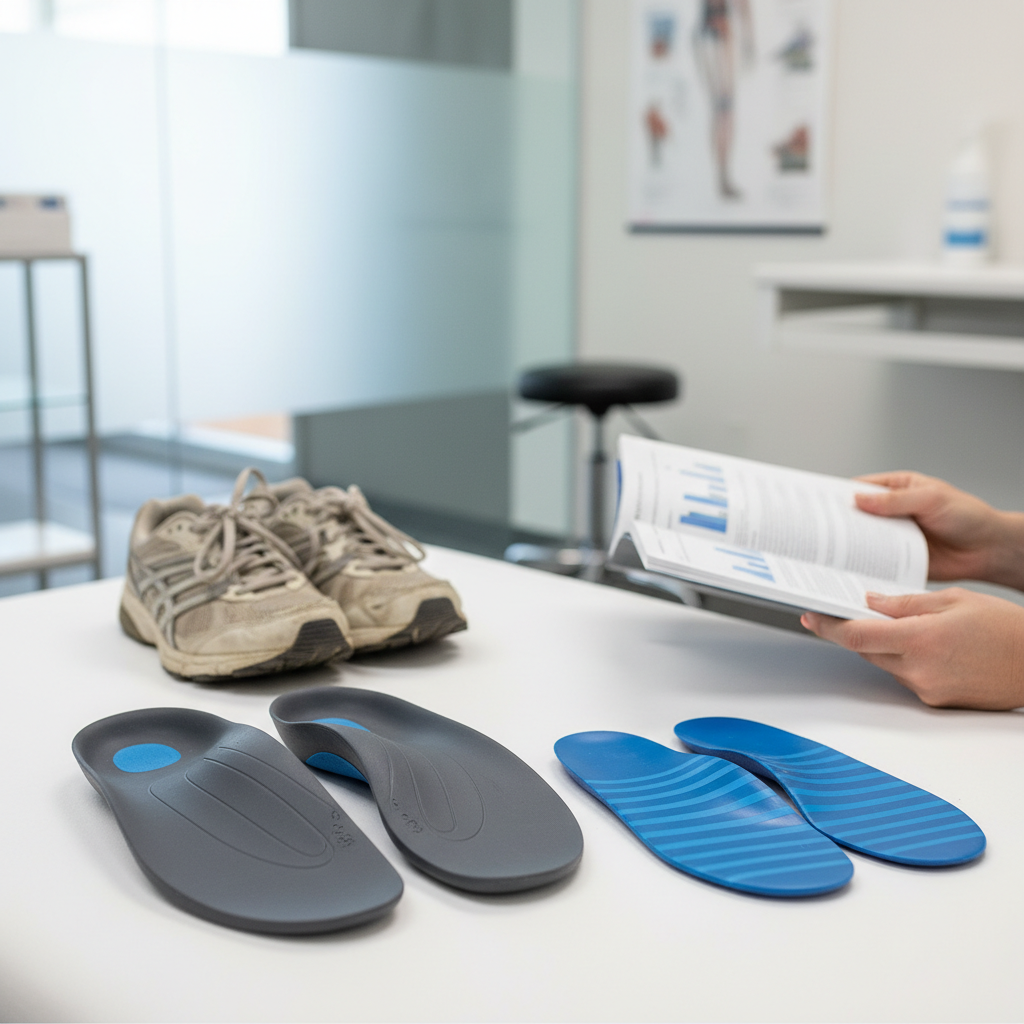
Custom Orthotics vs. Over-the-Counter Inserts: What Research Shows
Discover the scientific differences between custom-molded orthotics and store-bought inserts. Learn which option provides the corrective support needed for chronic foot pain, biomechanical issues, and long-term injury prevention based on clinical data.
That nagging ache in your arch or the sharp sting in your heel isn't just a nuisance; it is your body signaling a breakdown in your foundation. While a quick trip to the drugstore for a pair of gel insoles might seem like an easy fix, understanding the clinical distinction between cushioning and correction is vital for your long-term mobility.
What's actually happening
At its core, the foot is a complex mechanical structure consisting of 26 bones and dozens of joints that must coordinate perfectly to absorb shock. Over-the-counter (OTC) inserts are primarily designed for cushioning and comfort, providing a generic layer of padding that fits most shoes. They do not change how your foot functions; they simply make the ground feel softer.
In contrast, custom orthotics are prescription medical devices engineered to manage biomechanical abnormalities. By using advanced imaging or physical molds, these devices are crafted to control specific joint motions, redistribute pressure away from painful areas, and realign the kinetic chain from your feet up to your hips. Research suggests that while OTC inserts provide temporary relief for minor fatigue, they lack the structural integrity to correct the underlying root causes of chronic conditions.
Signs and symptoms to watch for
You might be wondering if your current footwear support is sufficient. Consider these common indicators that your feet require more than just a generic cushion:
- Localized pain in the heel or arch that is worst during your first steps in the morning.
- Uneven wear patterns on the soles of your shoes (e.g., wearing out the inner or outer edges prematurely).
- Frequent ankle sprains or a feeling of instability while walking on flat surfaces.
- Persistent calluses or corns in the same locations, indicating high-pressure points.
- Pain that radiates upward into the shins, knees, or lower back after standing.
Causes and risk factors
Several factors determine whether a patient can succeed with a retail insert or requires a custom-tailored solution. Plantar fasciitis, posterior tibial tendon dysfunction, and severe overpronation (flat feet) are the primary drivers for prescription intervention. Additionally, structural variations like high arches (pes cavus) or limb length discrepancies cannot be adequately addressed by mass-produced products.
Risk factors such as diabetes or rheumatoid arthritis also play a significant role. For these individuals, improper pressure distribution can lead to skin breakdown and ulcers, making the precision of a custom device a medical necessity rather than a luxury. Your activity level, body weight, and occupation—especially if you spend 8+ hours on hard surfaces—further influence the rate of mechanical wear on your joints.
How it's diagnosed
Determining the right path begins with a comprehensive biomechanical evaluation. This process is significantly more involved than standing on a retail pressure kiosk. A podiatrist will perform a non-weight-bearing exam to check joint range of motion and a weight-bearing exam to observe how your arches collapse or rotate under load.
- Gait Analysis: Observing your walking pattern to identify timing issues in your stride.
- Structural Assessment: Measuring the angles of the forefoot and rearfoot.
- Imaging: X-rays may be used to look for bone spurs or joint space narrowing.
- 3D Scanning: Creating a digital or physical map of your foot in a neutral position to capture its ideal alignment.
Treatment options
Conservative care
For mild, temporary foot fatigue, high-quality over-the-counter inserts can be a reasonable starting point. These are often made of foam, gel, or thin plastic. They are best suited for individuals with neutral foot types who simply need a bit more shock absorption in their athletic or work shoes.
Advanced/minimally invasive options
Custom functional orthotics represent the gold standard for non-surgical correction. Unlike store-bought versions, these are made from high-grade materials like carbon fiber or specialized thermoplastics. They are designed to last several years and can be adjusted (refurbished) as your foot structure evolves. Clinical studies often show that custom devices are significantly more effective at reducing pain in patients with chronic plantar fasciitis compared to generic inserts.
Surgical options
In cases where biomechanical deformities are too severe for orthotics to manage—such as advanced bunions or complete tendon ruptures—surgical reconstruction may be necessary. However, even after surgery, custom orthotics are frequently prescribed to maintain the surgical correction and prevent the deformity from recurring.
Key Takeaway: While over-the-counter inserts provide comfort through cushioning, custom orthotics provide therapy through alignment, making them a medical investment in your skeletal health.
Recovery and what to expect
Transitioning to custom orthotics is not instantaneous. Because these devices change how your muscles and tendons fire, there is a mandatory break-in period.
- Days 1-3: Wear the devices for only 1-2 hours per day.
- Week 1-2: Gradually increase wear time by an hour each day.
- Week 3: Most patients can wear them for a full day of normal activity.
You may feel some new muscle soreness in your calves or arches during this time; this is a sign that your body is adapting to a more efficient alignment. Most patients report significant pain reduction within 4 to 6 weeks of consistent use.
Prevention and self-care tips
- Rotate your shoes: Give the materials in your orthotics and shoes time to decompress between wears.
- Check for wear: Inspect OTC inserts every 3-6 months, as the foam loses its supportive memory quickly.
- Stretch your calves: Tight Achilles tendons can counteract the benefits of any orthotic device.
- Buy shoes for the insert: When shopping, bring your orthotics with you and ensure the shoe has a removable factory insole to make room for the device.
When to see a podiatrist
- If you have tried multiple brands of store-bought inserts without lasting relief.
- If you have a diagnosis of diabetes or peripheral neuropathy.
- If you experience sharp, stabbing pain that prevents you from completing daily exercise.
- If you notice visible changes in your foot shape, such as a flattening arch or a growing bunion.
- If you have chronic knee, hip, or lower back pain that worsens with walking.