
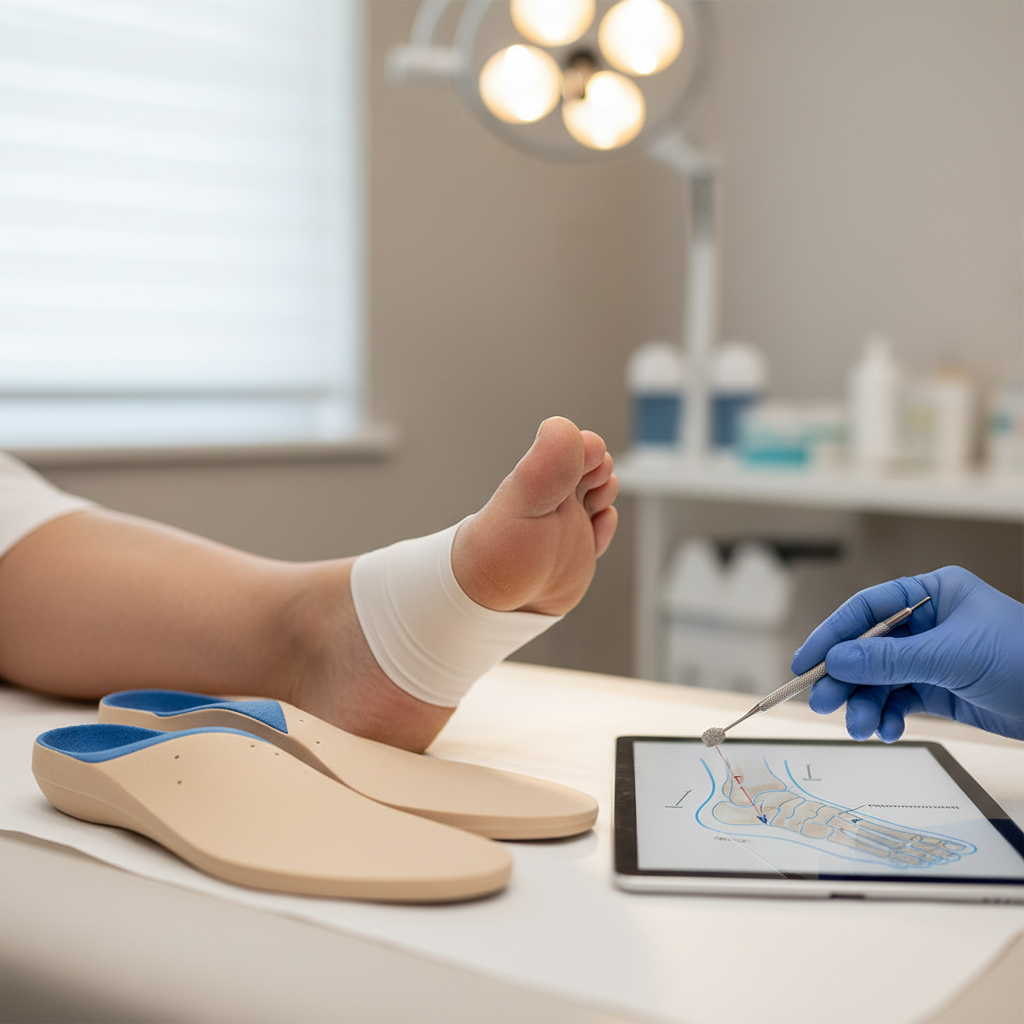
Bunion Treatment Options: From Custom Orthotics to Minimally Invasive Surgery
Discover how modern podiatry addresses bunions (hallux valgus). From non-surgical relief with orthotics to advanced minimally invasive surgery, learn how to stop the pain and restore your foot's natural alignment and function.
That growing bump at the base of your big toe is more than a cosmetic nuisance; it is a progressive structural change that can turn every step into a sharp, aching reminder of your foot health. While many people dismiss bunions as inevitable, modern podiatry offers a spectrum of solutions that prioritize both functional recovery and aesthetic results.
What's actually happening
A bunion, clinically known as hallux valgus, is a complex deformity of the first metatarsophalangeal (MTP) joint. It occurs when the long bone of the foot (the first metatarsal) shifts outward toward the other foot, while the big toe leans inward toward the smaller toes. This misalignment creates a bony prominence that is prone to friction and inflammation. Over time, the joint can become stiff or arthritic as the cartilage wears down due to the uneven distribution of pressure.
Signs and symptoms to watch for
Bunion symptoms often start subtly but intensify as the deformity progresses. Watch for these common indicators:
- A visible bulge or bump on the outside of the base of the big toe.
- Persistent or intermittent pain and tenderness around the joint.
- Redness, swelling, or inflammation over the bony prominence.
- Thickened skin or calluses where the first and second toes overlap.
- Restricted movement of the big toe, making it difficult to walk normally.
Causes and risk factors
Bunions are rarely caused by a single factor; rather, they are the result of a combination of genetics and lifestyle. According to the American Podiatric Medical Association (APMA), your foot type is hereditary, and certain structures are simply more prone to instability. Common risk factors include:
- Genetics: Inherited foot mechanics, such as flat feet or low arches, put excessive pressure on the MTP joint.
- Footwear: Tight, narrow, or high-heeled shoes squeeze the toes into an unnatural position, accelerating the deformity.
- Inflammatory Conditions: Rheumatoid arthritis can increase the risk of joint misalignment.
- Occupational Stress: Jobs that require prolonged standing or repetitive stress on the feet can worsen symptoms.
How it's diagnosed
Diagnosis begins with a clinical physical examination where the podiatrist assesses your range of motion and the alignment of your toes while standing. Weight-bearing X-rays are the gold standard for diagnosis, as they allow the doctor to measure the intermetatarsal angle and the hallux valgus angle. these measurements are critical for determining whether conservative management is sufficient or if surgical intervention is required to realign the bone.
Key Takeaway: A bunion is a progressive bone deformity, not just a skin callus; early intervention is the best way to prevent the need for major reconstructive surgery later in life.
Treatment options
Treatment is tailored to the severity of the deformity and the impact it has on your daily activities.
Conservative care
For mild to moderate bunions, the goal is to manage pain and prevent the progression of the curve. This often includes:
- Custom Orthotics: Prescription shoe inserts help redistribute weight and stabilize the joint.
- Footwear Modifications: Switching to shoes with a wide toe box and lower heels reduces direct pressure.
- Padding and Taping: Using non-medicated bunion pads can cushion the area against shoe friction.
- NSAIDs: Anti-inflammatory medications can help manage acute flare-ups of pain.
Advanced and minimally invasive options
When conservative measures fail, minimally invasive surgery (MIS) has become a preferred modern approach. Unlike traditional open surgery, MIS utilizes tiny incisions (often just a few millimeters) and specialized instruments to realign the bone. This technique typically results in less soft tissue damage, reduced swelling, and a faster return to weight-bearing activities compared to older methods.
Surgical options
In severe cases, a more comprehensive reconstruction may be necessary. This might involve a lapidus procedure, which fuses the unstable joint in the midfoot to provide a permanent correction, or an osteotomy, where the bone is cut and shifted into its proper position using small screws or plates to maintain stability during healing.
Recovery and what to expect
Recovery timelines vary based on the procedure performed. For minimally invasive corrections, many patients can walk in a specialized surgical shoe immediately or within a few days. However, full bone healing typically takes 6 to 8 weeks. During the first two weeks, elevation and icing are critical to manage swelling. Most patients return to athletic footwear and normal exercise within 3 to 4 months, depending on the complexity of the correction.
Prevention and self-care tips
While you cannot change your genetics, you can slow the progression of a bunion through proactive care:
- Measure your feet regularly: Foot size can change over time; always buy shoes that fit the larger foot.
- Avoid the "pointy toe": Choose shoes that allow your toes to wiggle freely.
- Strengthen your arches: Exercises like "towel curls" with your toes can help maintain foot intrinsic muscle strength.
- Use ice after activity: If the bump is red or sore after a long day, icing for 15 minutes can reduce inflammation.
When to see a podiatrist
You should schedule a professional evaluation if you experience any of the following:
- Pain that interferes with your daily walking or exercise routine.
- Difficulty finding shoes that fit comfortably due to the bump.
- Decreased movement in your big toe or signs of an ingrown toenail caused by crowding.
- Numbness or a "pins and needles" sensation in the toes.
- Redness and warmth at the joint, which could indicate an underlying bursitis or infection.