
Bunion Surgery Recovery Timeline: What to Expect During Your Healing Journey
Discover the realistic timeline for bunion surgery recovery, from the first few days of elevation to returning to your favorite shoes. Learn about modern techniques, healing milestones, and tips for a smooth, successful transition back to activity.
That persistent, aching bump at the base of your big toe has finally become more than a nuisance, and you are considering surgery to reclaim your mobility. While the prospect of a pain-free stride is exciting, the most common question patients ask is exactly how long they will be sidelined before returning to normal life.
What's actually happening
Bunion surgery, or a bunionectomy, is more than just removing a bump of bone. It is a structural realignment of the first metatarsal bone and the surrounding soft tissues. When a bunion forms, the bone pivots outward while the toe points inward; surgery involves cutting the bone (an osteotomy), shifting it back into its natural anatomical position, and securing it with specialized hardware like tiny screws or plates.
During the recovery process, your body is performing a complex biological feat. It must knit the bone back together at the site of the cut while simultaneously healing the ligaments and tendons that were adjusted. This cellular repair requires a steady blood supply and, most importantly, protection from excessive mechanical stress during the early phases of healing.
Signs and symptoms to watch for
As you navigate the weeks following your procedure, your body will signal its progress through various sensations. Monitoring these signs helps ensure you are on the right track for a successful recovery.
- Post-operative swelling: This is the most persistent symptom and can last for several months as the lymphatic system adjusts.
- Localized bruising: It is common to see discoloration around the incision and even into the toes for the first 14 days.
- Numbness or tingling: Temporary nerve irritation is normal as the surgical site heals.
- Stiffness: The big toe joint will feel tight initially, requiring guided movement to regain flexibility.
Causes and risk factors
While the surgery fixes the deformity, certain factors can influence how quickly or slowly you recover. Understanding these helps set realistic expectations for your personal timeline.
- Complexity of the Correction: A mild bunion requiring a simple shift heals faster than a severe deformity involving multiple bone cuts.
- Bone Quality: Patients with high bone density typically experience faster primary healing than those with osteopenia.
- Smoking Status: Nicotine constricts blood vessels, significantly delaying bone fusion and increasing the risk of non-union.
- Adherence to Protocols: The single biggest risk factor for a delayed recovery is putting weight on the foot before the bone is stable enough to support it.
How it's diagnosed
Before surgery is even scheduled, a comprehensive diagnostic workup ensures the right procedure is chosen for your specific anatomy. Dr. Eskander utilizes weight-bearing X-rays to measure the intermetatarsal angle and the hallux valgus angle. These measurements dictate whether a head, mid-shaft, or base osteotomy is required. Physical examination of the joint's range of motion and an assessment of your gait also play a critical role in planning the surgical approach and the subsequent recovery protocol.
Treatment options
Recovery looks different depending on the surgical technique employed. Modern podiatric surgery focuses on stability and early mobilization whenever possible.
Conservative care
In the context of surgery, "conservative care" refers to the immediate post-operative period. This involves the RICE protocol (Rest, Ice, Compression, Elevation). Keeping the foot above the level of your heart for the first 72 hours is non-negotiable for managing pain and reducing the initial inflammatory surge.
Advanced/minimally invasive options
Minimally invasive bunion surgery (MIS) uses tiny incisions and specialized tools to realign the bone. Because there is less disruption to the skin and soft tissue, patients often experience significantly less swelling and a faster return to closed-toe shoes compared to traditional open methods. However, the internal bone healing time remains relatively consistent.
Surgical options
For severe deformities, a Lapidus procedure may be performed, which fuses the joint at the base of the metatarsal. This provides maximum stability for patients with hypermobility but often requires a longer period of non-weight bearing (using crutches or a knee scooter) to ensure the fusion site solidifies properly.
Key Takeaway: While you may be walking in a surgical boot within days, true bone healing takes approximately 6 to 8 weeks, and residual swelling can persist for up to 6 months.
Recovery and what to expect
Recovery is a marathon, not a sprint. While every patient is unique, most follow a standardized clinical timeline:
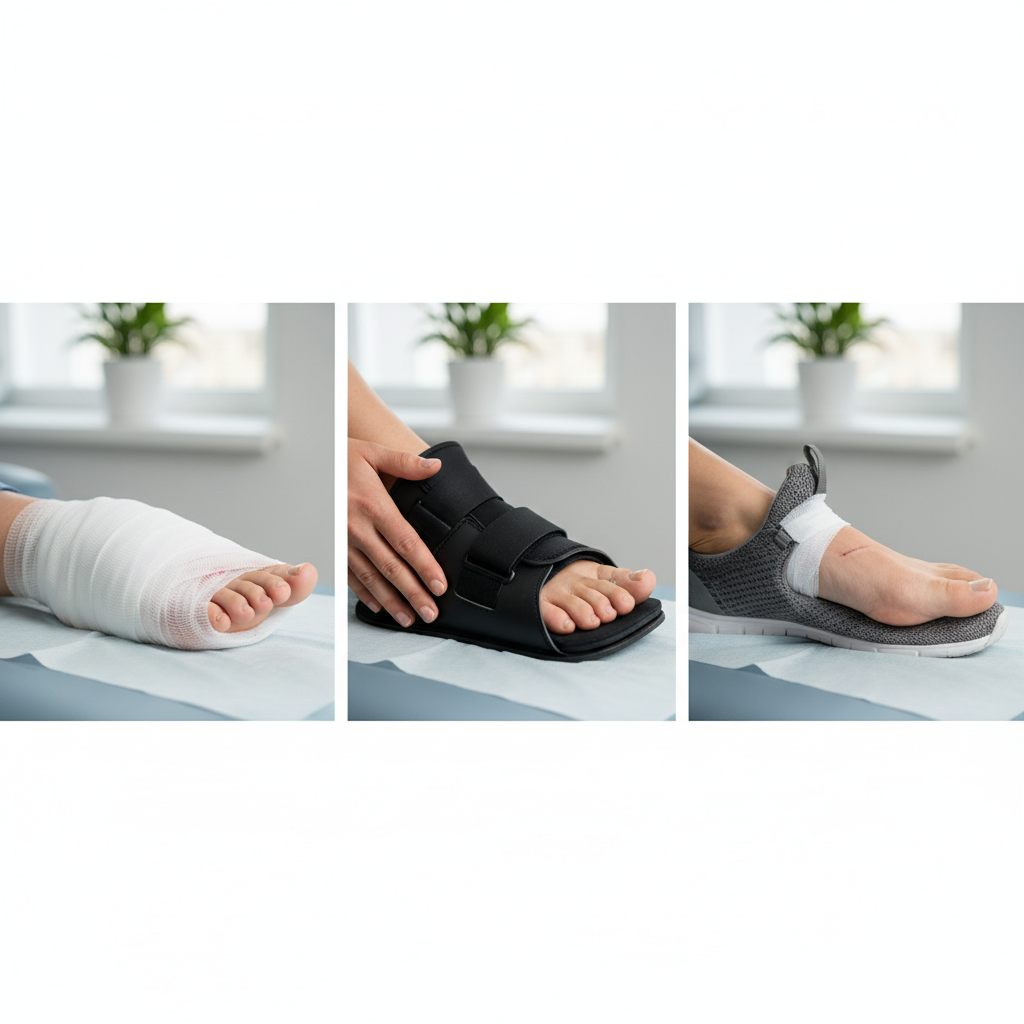
- Weeks 1–2: Focus is on wound healing. You will likely be in a surgical shoe or boot and must keep the bandages dry. Stitches are typically removed at the end of week two.
- Weeks 3–6: Bone consolidation begins. You may start transitioning to increased weight-bearing in a protective boot. Light range-of-motion exercises for the big toe are often introduced.
- Weeks 7–12: Most patients transition back into wide, supportive athletic shoes. You can begin low-impact activities like cycling or swimming.
- Months 4–6: High-impact activities like running or jumping are usually cleared. This is also when the last of the lingering swelling typically dissipates.
Prevention and self-care tips
To protect your investment and speed up your return to activity, follow these proactive steps:
- Wiggle your toes: Once cleared by your doctor, gentle movement prevents the joint from "freezing" due to scar tissue.
- Manage your footwear: Avoid narrow, pointed shoes or high heels for at least six months to prevent putting undue pressure on the healing site.
- Use compression: Wearing a compression sock (if approved) can help manage the late-afternoon swelling that occurs when you return to standing.
- Optimize nutrition: Ensure adequate intake of Calcium and Vitamin D to support the biological process of bone remodeling.
When to see a podiatrist
While discomfort is expected, certain red flags require immediate professional evaluation to ensure the success of your procedure:
- Fever or chills, which may indicate a post-operative infection.
- Excessive pain that is not managed by prescribed medication.
- Sudden, significant swelling or redness in the calf (a potential sign of a blood clot).
- Saturated dressings or foul-smelling drainage from the incision site.
- A feeling of "shifting" or a sudden pop in the foot after a fall or accidental weight-bearing.