Bunion Surgery Recovery: A Comprehensive Guide to Timelines and Healing
Wondering how long it takes to bounce back after bunion surgery? Learn about the recovery phases, from the first few days to full activity, and discover tips for a faster, smoother healing process under the care of Dr. Andrew N. Eskander.
That sharp, aching pain at the base of your big toe can make every step feel like a chore, eventually making surgery a necessary step toward reclaiming your mobility. While the prospect of a straighter, pain-free foot is exciting, the most common question patients ask is: "How long will I be off my feet?"
What's actually happening
Bunion surgery, or a bunionectomy, is more than just removing a bump of bone. According to the American Orthopaedic Foot & Ankle Society, the procedure involves realigning the bone, ligaments, and tendons to restore the natural architecture of your foot. Depending on the severity of the deformity, a surgeon may perform an osteotomy (cutting and shifting the bone) or a lapidus procedure (fusing a joint to provide permanent stability).
Because bone is being reshaped or fused, the body must undergo a biological healing process similar to repairing a fracture. This requires a period of immobilization followed by gradual reintroduction of weight-bearing activities to ensure the new alignment remains secure.
Signs and symptoms to watch for
As you navigate the healing process, it is important to distinguish between normal postoperative sensations and signs that require medical attention. Common experiences during the first few weeks include:
- Localized swelling that may fluctuate based on your activity level.
- Mild bruising around the incision site and extending toward the toes.
- Occasional tingling as the small nerves in the skin begin to heal.
- Stiffness in the big toe joint, which is a natural response to immobilization.
Causes and risk factors
The length and complexity of your recovery are often dictated by the initial cause of the bunion and your overall health profile. Factors that can influence your healing timeline include:
- Degree of Deformity: Severe bunions requiring extensive bone work often necessitate a longer non-weight-bearing period.
- Bone Quality: Conditions like osteoporosis can slow down the rate at which the osteotomy site heals.
- Circulation and Smoking: Nicotine constricts blood vessels, significantly increasing the risk of non-union (where the bone fails to heal) and wound complications.
- Compliance: Following postoperative instructions regarding elevation and weight-bearing is the single most important factor in a successful outcome.
How it's diagnosed
Before determining your specific recovery plan, a podiatrist uses diagnostic tools to map out the surgical approach. This typically involves weight-bearing X-rays to measure the hallux valgus angle and the intermetatarsal angle. In complex cases, a CT scan may be used to evaluate the health of the surrounding joints. These diagnostics allow the surgeon to predict whether you will need a simple shaving of the bone or a more complex structural realignment.
Treatment options
Recovery protocols vary based on the specific surgical technique used to correct the deformity.
Conservative care
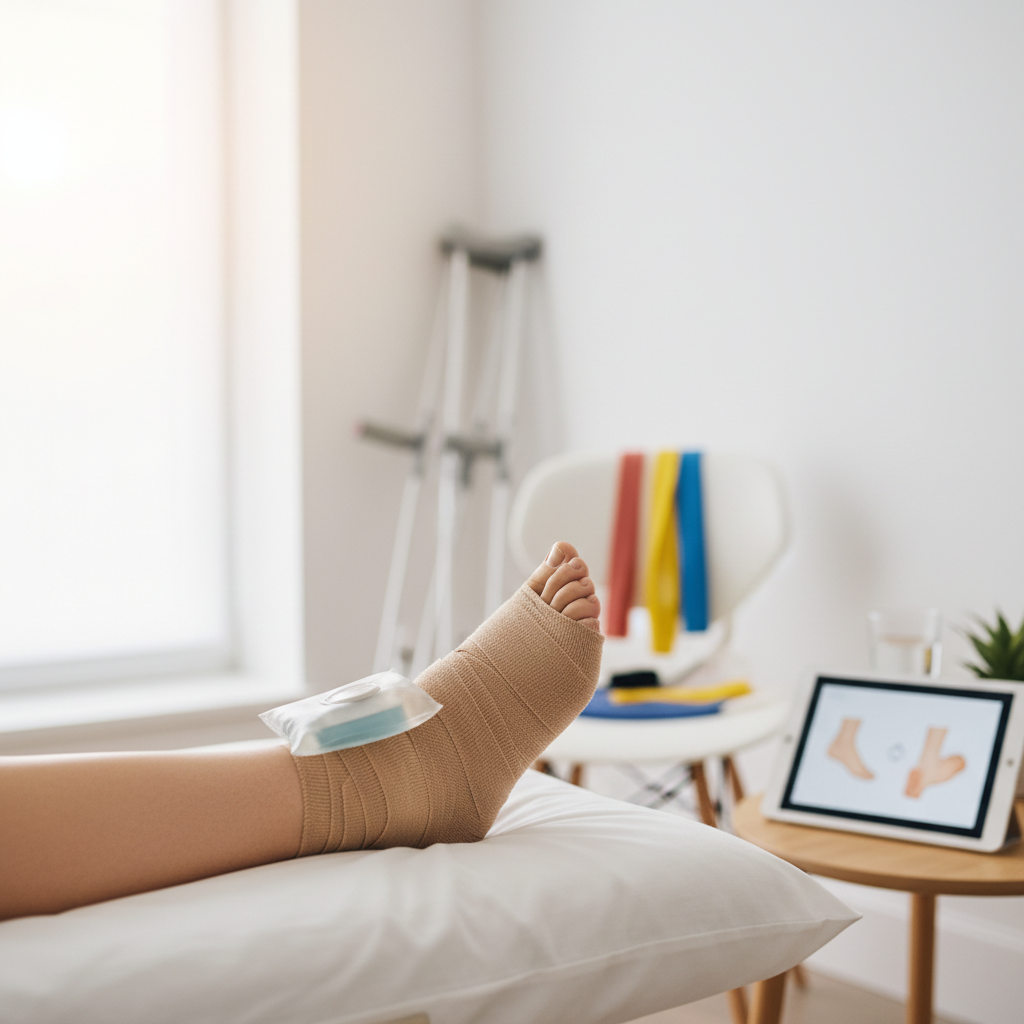
Immediately following surgery, the focus is on pain management and swelling reduction. This involves the RICE method (Rest, Ice, Compression, and Elevation). You will likely be placed in a specialized surgical shoe or a tall walking boot to protect the surgical site while the initial inflammatory phase subsides.
Advanced and minimally invasive options
Modern podiatry often utilizes minimally invasive bunion surgery (MIS). In these cases, smaller incisions are used, which can lead to less soft tissue trauma. Patients undergoing MIS may experience a faster return to closed-toe shoes and a shorter overall recovery period compared to traditional open procedures.
Surgical options
For significant deformities, a Lapidus Bunionectomy might be performed. This involves using hardware like plates and screws to stabilize the foundation of the foot. While this provides a very low recurrence rate, it often requires a stricter period of non-weight-bearing to allow the fusion site to become solid.
Key Takeaway: While the initial healing phase lasts about 6 weeks, full recovery—where swelling is completely gone and you can return to high-impact sports—typically takes 4 to 6 months.
Recovery and what to expect
Recovery is a marathon, not a sprint. Here is a general timeline for a standard bunionectomy:
- Weeks 1-2: You will focus on elevation and keeping the surgical dressing dry. Stitches are usually removed at the end of the second week.
- Weeks 2-6: Many patients transition into a surgical shoe or boot. You may begin light "heel-touch" walking as directed by your surgeon.
- Weeks 6-12: X-rays are taken to confirm bone healing. If the bone looks stable, you can transition into wide-toe-box sneakers. Physical therapy often begins now to restore range of motion.
- 3-6 Months: Swelling continues to dissipate, and you can gradually return to activities like jogging or wearing dress shoes for short periods.
Prevention and self-care tips
To ensure your recovery stays on track and to prevent the bunion from returning in the future, consider these strategies:
- Elevate aggressively: Keep your foot above the level of your heart for the first 72 hours to minimize throbbing and swelling.
- Wear wide shoes: Avoid pointed-toe shoes or high heels for at least six months post-surgery to prevent putting pressure on the new alignment.
- Use toe spacers: If recommended, these can help maintain the corrected position during the soft-tissue remodeling phase.
- Adhere to physical therapy: Strengthening the intrinsic muscles of the foot provides better support for your arches and the big toe joint.
When to see a podiatrist
While discomfort is expected, certain symptoms indicate a potential complication that needs immediate evaluation:
- Sudden, sharp pain that is not relieved by prescribed medication or elevation.
- Redness, warmth, or drainage from the incision site, which may indicate an infection.
- Calf pain or swelling, which could be a sign of a blood clot (DVT).
- A persistent fever over 101 degrees Fahrenheit.
- Loss of sensation or extreme numbness that does not resolve with repositioning.